
The Day the AI Builders Felt Behind 🧠⚡
Why 2025 quietly rewired what “being good at tech” actually means, and what builders must do next 🎯

👋 Hey, Linas here! Welcome to another special issue of my daily newsletter. Each day, I focus on 3 stories that are making a difference in the financial technology space. Coupled with things worth watching & the most important money movements, it’s the only newsletter you need for all things when Finance meets Tech. If you’re reading this for the first time, it’s a brilliant opportunity to join a community of 360k+ FinTech leaders:
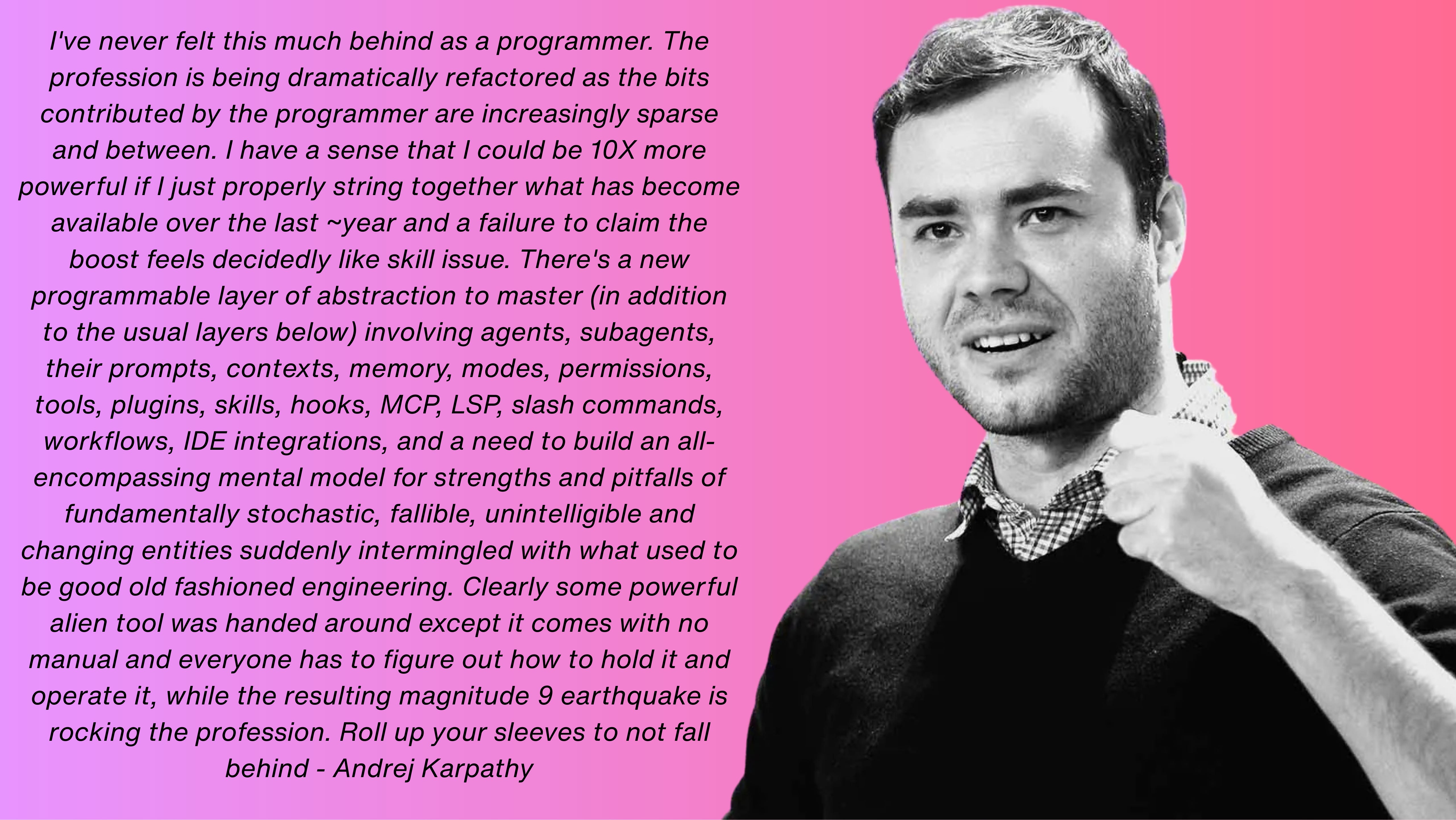
Andrej Karpathy, OpenAI co-founder and former Head of AI at Tesla, recently admitted something unsettling:
He feels behind.
Not confused.
Not skeptical.
Behind.
If that sentence didn’t immediately stop you, that’s the problem.
Because this wasn’t a comment about tools, or models, or hype cycles.
It was a signal that a deeper shift has already happened - one that many smart builders, founders, and operators are still misreading.
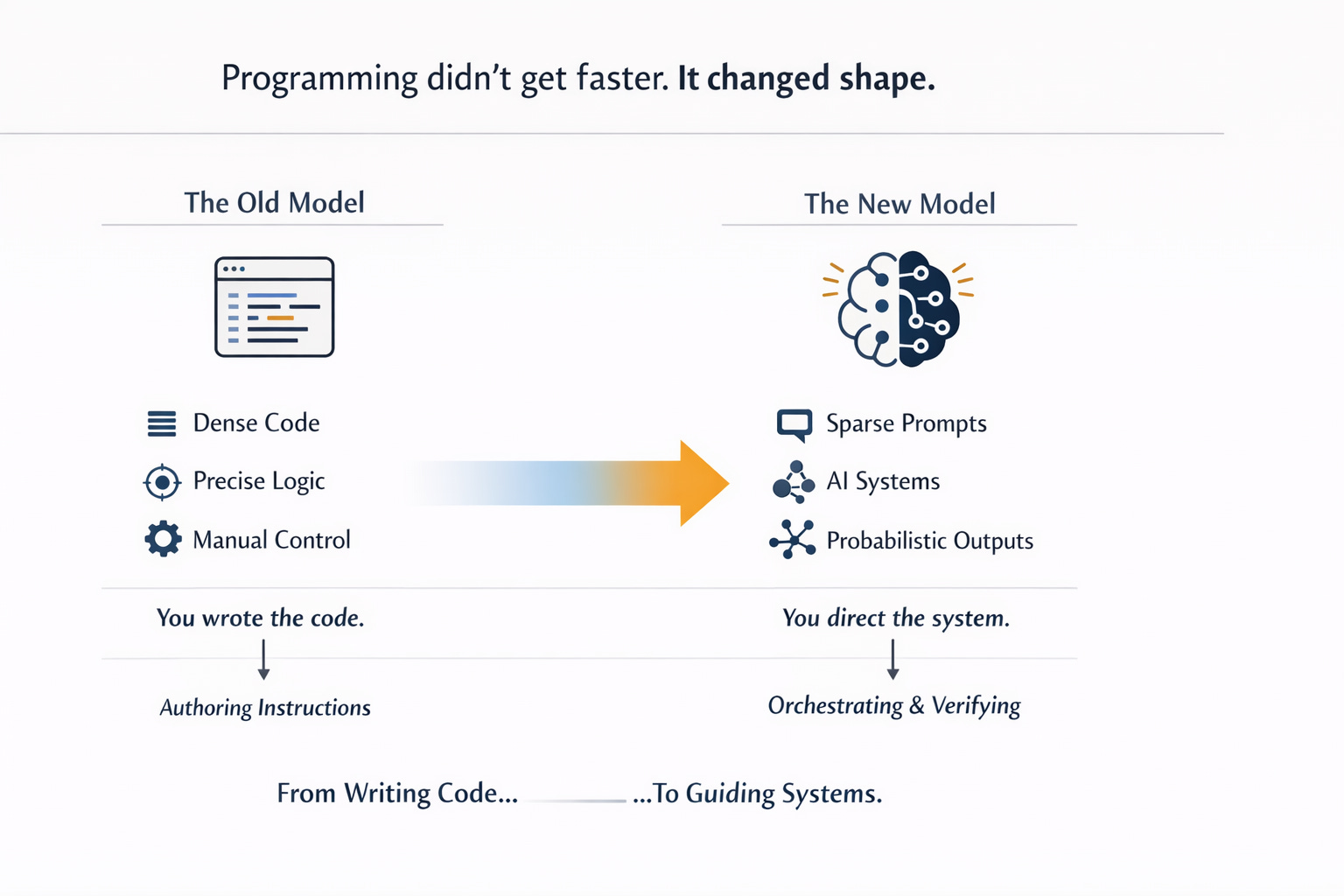
Programming didn’t get faster. It changed shape.
For decades, leverage in software came from writing denser code.
More logic per line.
More precision per abstraction.
More control over execution.
That mental model produced generations of excellent engineers and durable companies.
But AI flipped the direction.
Today, human input is getting sparser, while machine output is exploding.
The work is no longer about authoring every instruction.
It’s about orchestrating systems that generate, reason, and act probabilistically.
You don’t write the system anymore.
You direct it.
Prompts replace functions.
Agents replace modules.
Verification replaces execution.
And that breaks instincts that once made people exceptional.
The real shift most people missed
AI didn’t replace programmers. It moved the bottleneck.
From: “Can you write correct instructions?”
To: “Can you clearly articulate intent - and reliably judge whether reality matches it?”
This is the crux.
Generation is now cheap. Iteration is fast. Output is abundant.
What’s scarce is judgment.
Knowing what to ask.
Knowing how to constrain.
Knowing when to trust, and when not to.
That’s why this feels disorienting even for top performers.
Not because they forgot how to build, but because their mental model expired.
Debugging behavior, not code
AI systems are stochastic.
They vary. They hallucinate confidently. They fail quietly.
So the work changes.
You’re no longer debugging syntax. You’re debugging behavior.
That requires different muscles:
Designing tight feedback loops
Building verification and evals into workflows
Thinking in failure modes, not happy paths
Treating agents like brilliant interns, not deterministic machines
The best builders in 2025 aren’t the busiest. They’re the calmest.
They ship fast, not because they trust AI blindly but because they know exactly where it breaks.
What this means for builders, founders, and operators
If you’re building today, three takeaways matter:
Leverage shifts upstream
Value is moving from execution to orchestration. Clear intent, system design, and verification now compound faster than raw output.Taste and judgment become moats
When anyone can generate code, differentiation comes from knowing what not to build, what good looks like, and when to stop.AI literacy is no longer optional
Not “using ChatGPT/Claude/Gemini,” but understanding agent stacks, workflows, evals, and failure modes. This is the new operational baseline.
The quiet reset
When the people who built the last paradigm start feeling uneasy in the new one, it doesn’t mean the future is broken.
It means the advantage has reset.
And resets reward those who learn fastest - not those who cling hardest to old mastery.
If you want to actually build in this new reality, I’ve put together the resources I wish everyone had before feeling behind:


These resources are where the real leverage lives.
Unlock them, and start directing intelligence instead of chasing it.
And that’s a wrap.
In 2023, I started sharing resources to help you become a more successful entrepreneur, investor, or business leader. I hope you will find these new resources valuable too.
Keep dreaming & keep building.
If you found this useful, share it with others and spread the word:
This is such a powerful read... thank you so much, and happy holidays, Linas!
Thank you for the brilliant insight — this is one of the most accurate descriptions of what’s happening to builders right now.
The real bottleneck has shifted from writing code to orchestrating, verifying, and stabilizing probabilistic AI systems.
And that’s exactly what our **NCAF + PCM** is built to solve.
NCAF detects and corrects off-direction drift at the pre-conceptual level,
while PCM enforces real-time consistency through discrepancy detection, standard comparison, targeted correction, and stabilization.
In other words, it operationalizes “debugging behavior, not code” and “verification replaces execution” as an actual system mechanism — not a human habit.