
Stripe doesn’t need PayPal. That’s why it might buy it 💳♟️
FinTech is Eating the World, 25 February

Hey Everyone,
Good morning & happy Wednesday! Today, we’re breaking down what might be the most consequential FinTech story of 2026 so far: Stripe just hit a $159 billion valuation, published an annual letter that reads like a blueprint for the future of money, and on the very same day, Bloomberg reported the Collisons are eyeing an acquisition of all or parts of PayPal PYPL 0.00%↑ (~3,000 words deep dive into why Stripe doesn’t actually need PayPal and that’s exactly why it might buy it, the real strategic logic most coverage is missing, how Adyen fits into the picture, the Elon Musk angle, and what a deal would mean for the entire payments industry + lots of bonus reads & resources on Agentic Commerce, AI in Finance, etc. inside). PayPal peaked at $356B in 2021. It’s now worth just $44B. Stripe just surpassed it in total payment volume for the first time. The age of the consumer payment brand may be ending, and this story tells you why. So let’s jump straight into the colossal stuff 🌶️
Stripe doesn’t need PayPal. That’s why it might buy it 💳♟️

The BIG News 🔥 On the same day Stripe announced a whopping $159 billion valuation and published an annual letter radiating confidence about AI agents, stablecoins, and a purpose-built blockchain, Bloomberg reported that the Collison brothers are considering buying all or parts of PayPal PYPL 0.00%↑.
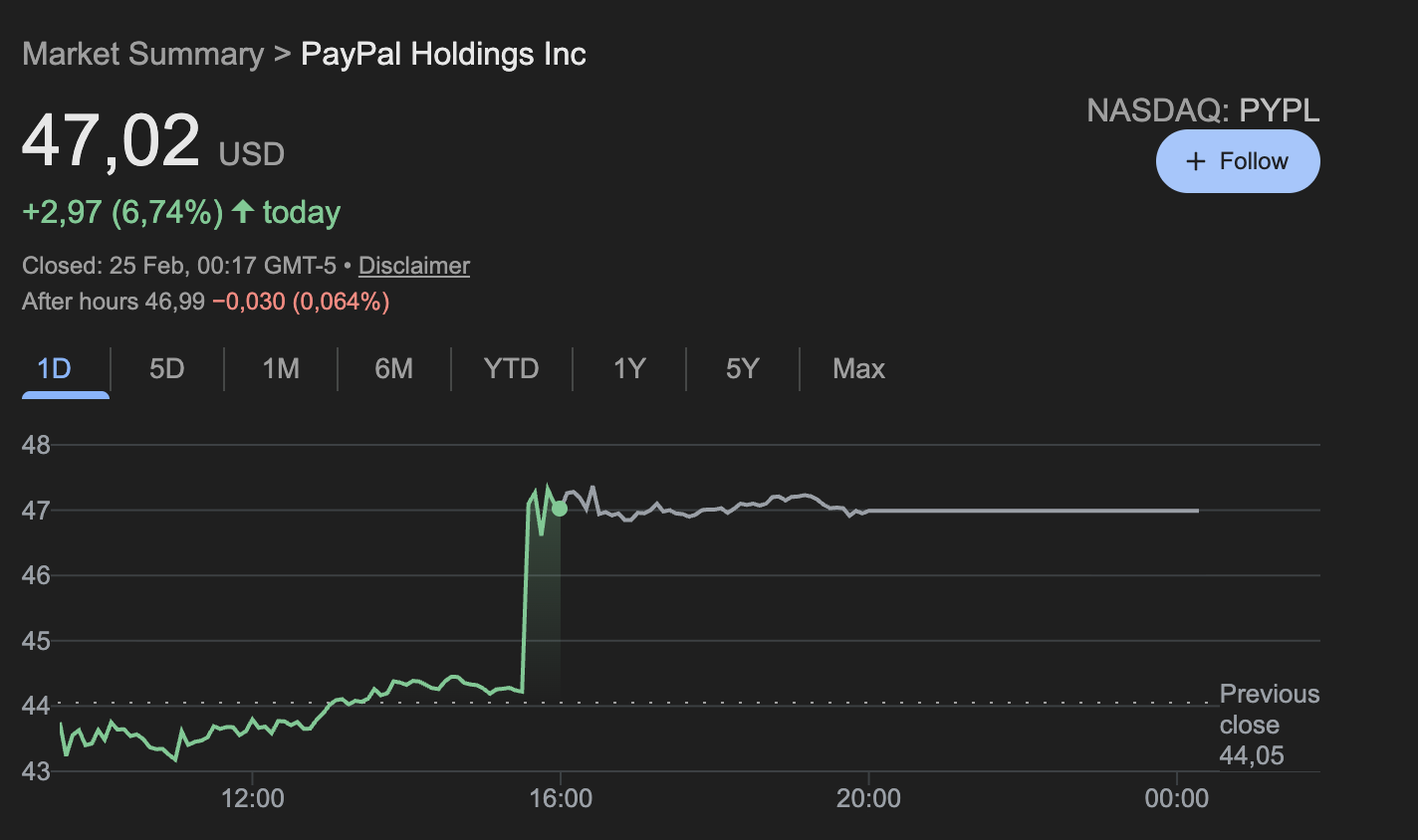
PayPal’s stock immediately jumped 7%. The market treated this as good news for PayPal.
It should have treated it as a eulogy.
PayPal peaked at $356 billion in July 2021. It is now worth roughly $44 billion, a decline of 88% in 4.5 years 😳 In that same period, Stripe went from a $95 billion valuation (its 2021 peak before a brief markdown) to $159 billion, while growing total payment volume to $1.9 trillion, surpassing PayPal’s $1.79 trillion for the first time.
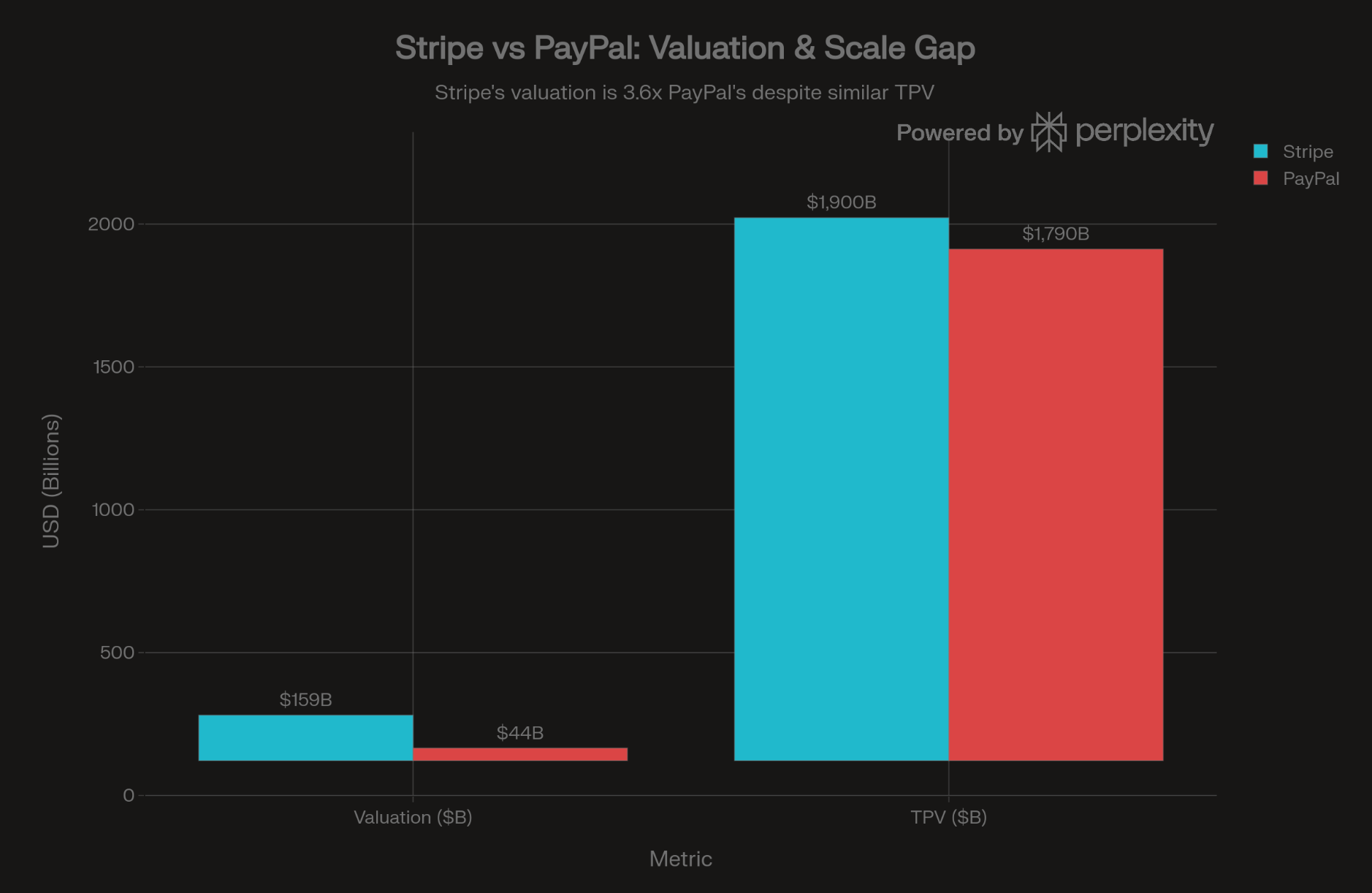
A company most consumers have never heard of now processes more money than the most recognized digital payment brand on earth, and is valued at nearly 4 times its market cap. Let that sink in.
The conventional read on this story is about M&A mechanics: Can a private company swallow a $44 billion public one? What about antitrust? Which pieces of PayPal would Stripe want? 🤔
Those are fine questions. But they miss what this moment actually reveals. The real story is that payments have undergone a permanent structural inversion: infrastructure has won over brand, and consumer-facing payment products are becoming commodities.
Most importantly, PayPal’s collapse is not a management failure (or at least not a management failure only). Two CEOs in three years couldn’t fix it. The problem is clearly architectural. And Stripe’s interest in buying PayPal isn’t a vote of confidence in PayPal’s future.
It’s a recognition that 434 million consumer accounts are worth more as raw material for an infrastructure company than as a standalone business.
To understand why Stripe might want PayPal, you first need to understand how thoroughly Stripe has outgrown the “payments company” label.
