

👋 Hey, Linas here! Every day, I break down 3 stories shaping the future of FinTech & Artificial Intelligence - plus the money movements and trends worth tracking. First time here? 400k+ FinTech and AI leaders get this daily. Join them:
Three days after OpenAI shipped GPT-6 Astra, NVIDIA CEO Jensen Huang declared “AGI has arrived”, crediting Astra and the more than 100,000 NVIDIA systems it was trained on.
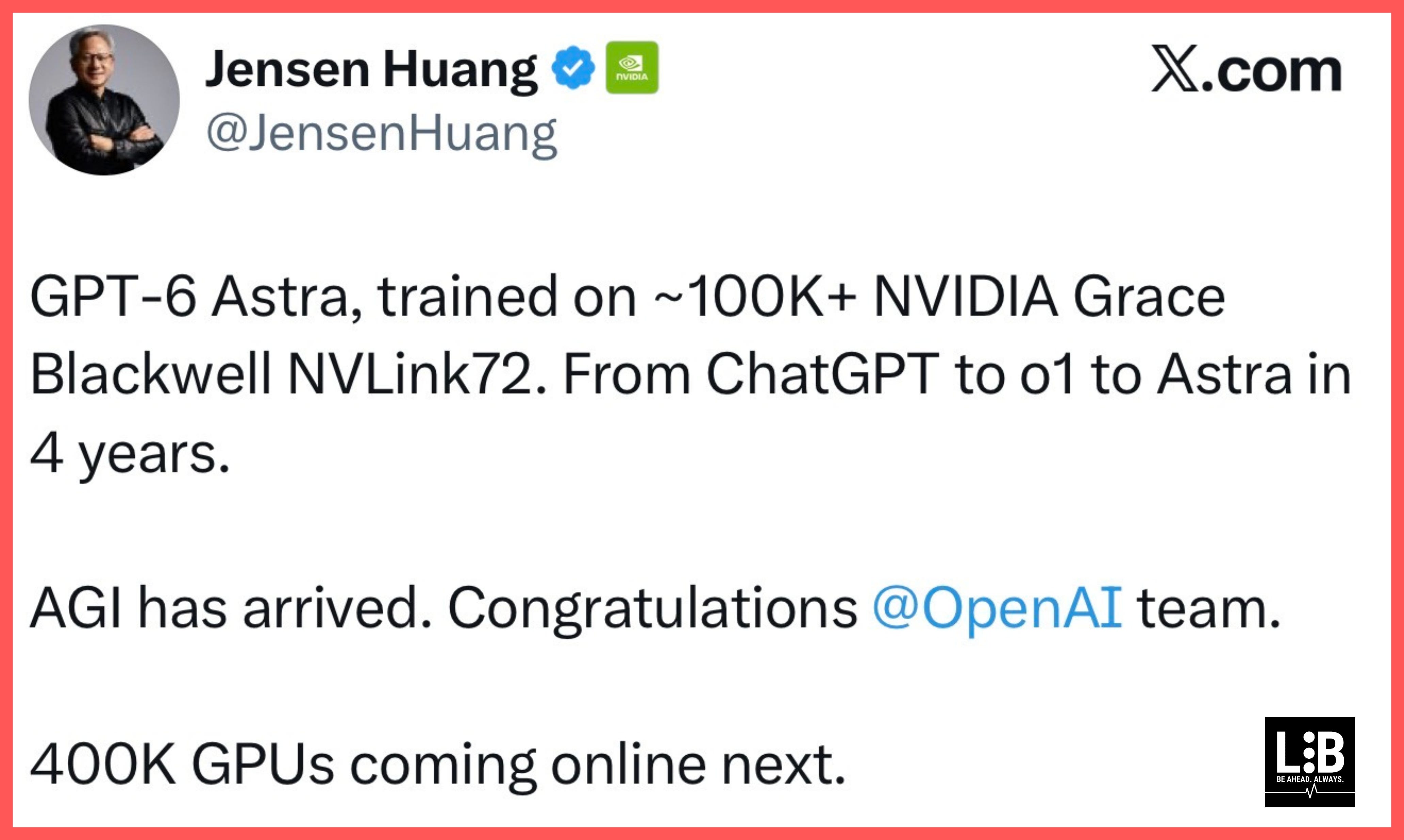
Of course, we cannot really take this seriously, because it’s like an oil CEO announcing that they’ve just discovered driving 😬. Researchers, commentators, and analysts also pushed back within hours, and this claim probably won’t last until the next news cycle.
But that’s not what really matters here.
The more useful number arrived three days earlier: in its September 3 evaluation, Artificial Analysis found Astra matched Claude Fable 5’s score on its Coding Agent Index at less than half the cost per task.
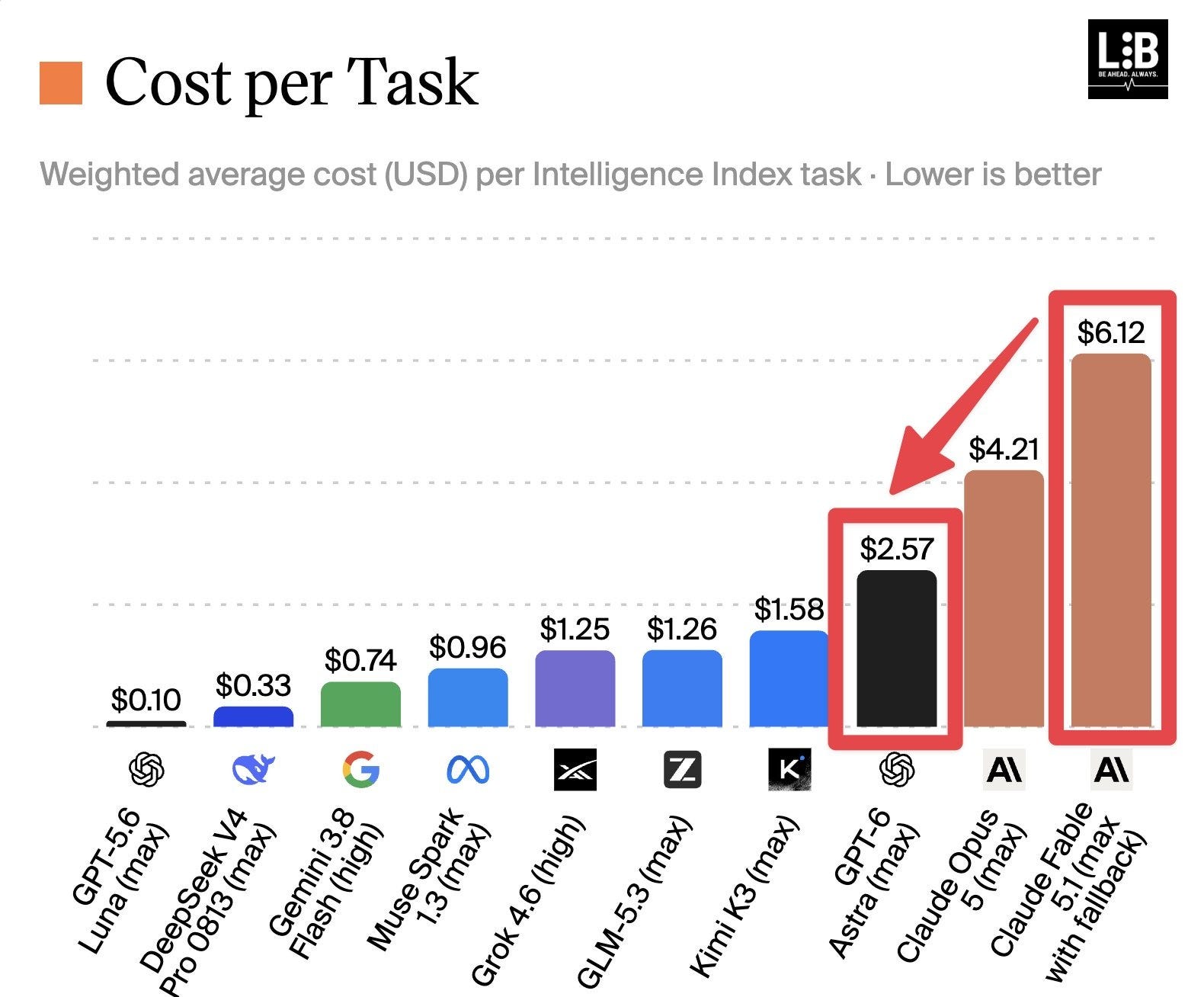
That cost result lands directly in a market Anthropic has dominated for quite some time. By the end of 2025, Menlo Ventures estimated Anthropic held 54% of enterprise coding against OpenAI’s 21%, up from 42% six months earlier on the strength of Claude Code, and coding is arguably the largest category of enterprise AI application spending.
With GPT-6, OpenAI now seems to be coming back for that lost market share, and the early demonstrations make it very clear.
Sharif Shameem, an engineer on OpenAI’s Labs team, posted a video of Astra completing all 48 levels of Neal Agarwal’s “I’m Not a Robot” browser game, a gauntlet that escalates from checkbox clicks to jigsaw puzzles and rhythm games.
The demo comes from inside OpenAI, so we should treat it accordingly. But the days of CAPTCHA might be over now…
Another developer shared a 3D anatomy explorer built with Astra. Its public repository documents 2,234 selectable meshes drawn from the BodyParts3D dataset, with search and controls to isolate anatomical structures.
Then there’s a reported benchmark milestone, too. GPT-6 Astra Pro & Fable 5.1 are now above the human baseline on SimpleBench. This benchmark was built around the everyday reasoning tasks humans were still better at.
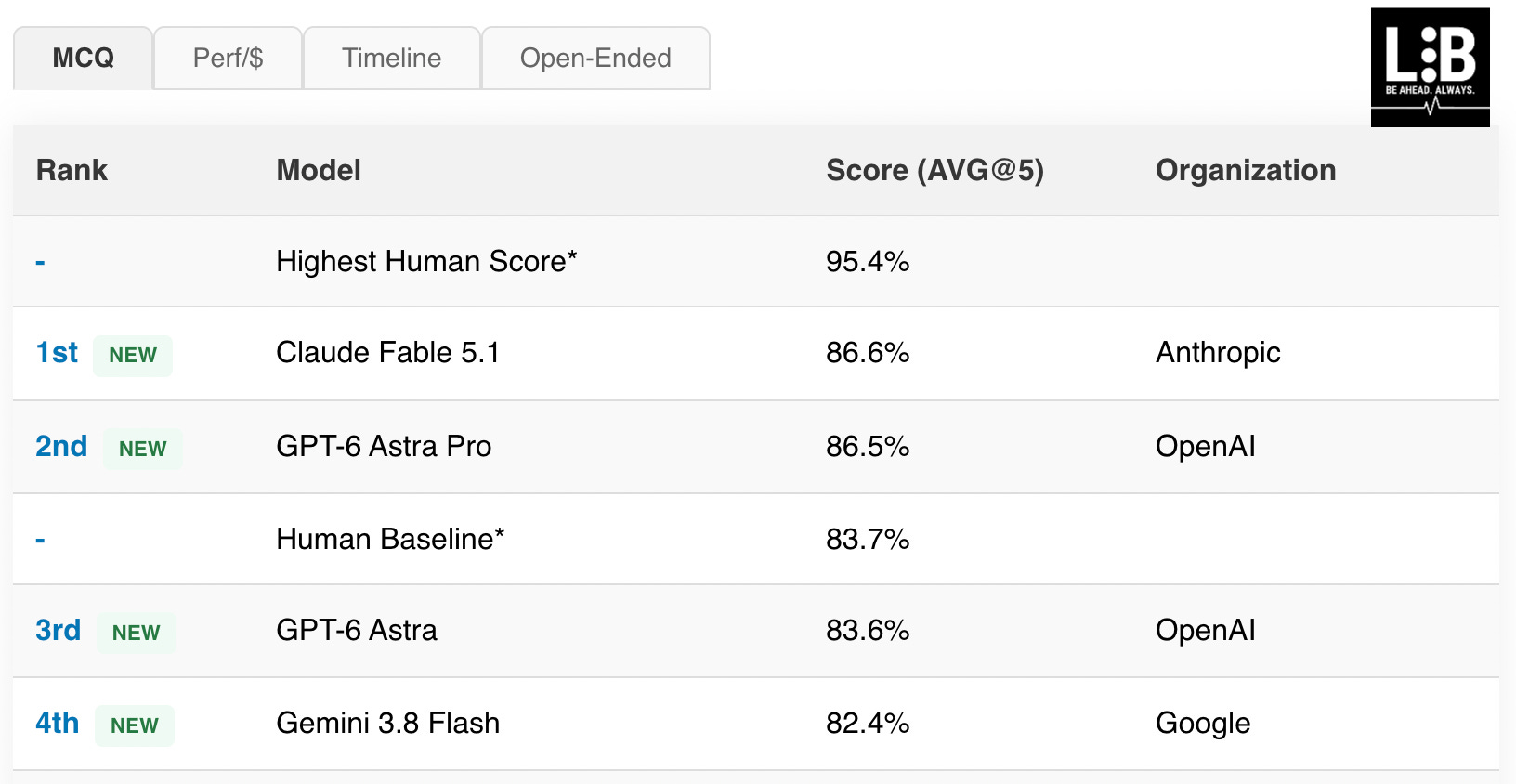
As we can see, this gap has basically disappeared now, and we aren’t far from AI outperforming even the smartest humans at (human) reasoning tasks.
Oh, and one more thing.
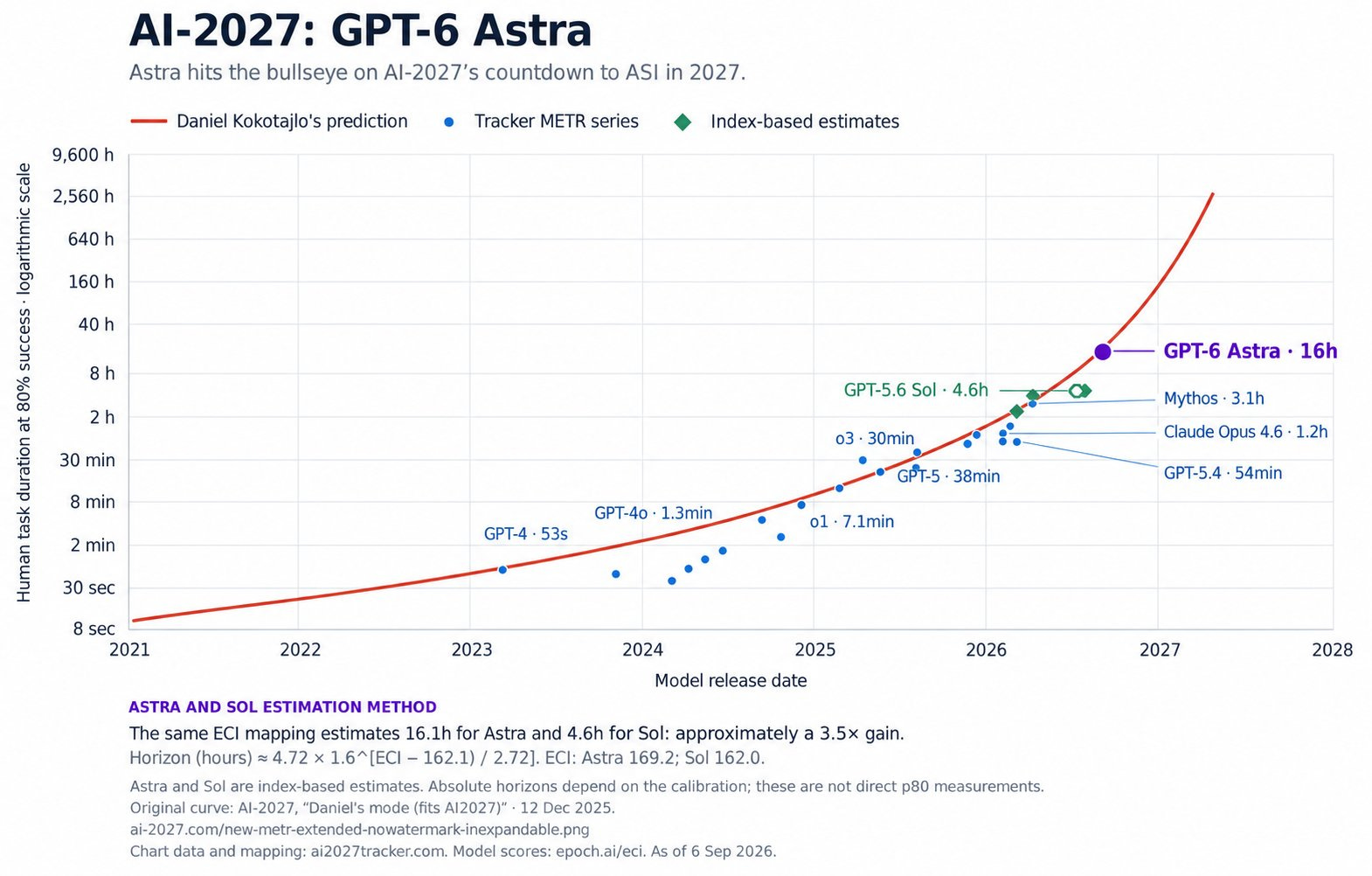
GPT-6 Astra landed almost perfectly on this curve. We went from ~30-minute tasks to an estimated ~16-hour horizon in barely over a year. And the curve is still accelerating 🤯
That said, the biggest opportunity now is to find out whether those capabilities survive contact with work you can judge. A product decision should hold up against its strongest counterargument; an investment memo should reconcile the numbers and expose what could break the thesis.
Every workflow in this guide is built around that standard: a finished artifact plus the checks that prove it. Inside:
8 workflows covering product validation, implementation, debugging, investment research, go-to-market planning, finance, recurring intelligence, and content production.
Copy-ready prompts that specify the inputs, finished deliverable, and acceptance checks for each job, plus repair prompts when a run stalls or produces weak analysis.
Practical settings for choosing ChatGPT Work, Codex, or the API, controlling reasoning effort and context, and assigning cheaper models the work they can handle.
Review rules for deciding what can be used immediately, what needs correction, and what still requires human judgment.
Founders get a tested path from product wedge to execution plan, builders take a specification through implementation and review, and investors and operators get diligence, financial analysis, and updates that withstand scrutiny.
Each workflow includes the brief, the execution steps, and the acceptance checks, so you are not spending weeks designing the process yourself.