

👋 Hey, Linas here! Every day, I break down 3 stories shaping the future of FinTech & Artificial Intelligence - plus the money movements and trends worth tracking. First time here? 370k+ FinTech and AI leaders get this daily. Join them:
Leopold Aschenbrenner is either the most important investor no one on Wall Street has heard of, or the most dangerous kind of genius: one who might actually be right. In the twelve months following the launch of his hedge fund, Situational Awareness LP, in September 2024, he grew its disclosed U.S. equity exposure from roughly $225 million to $5.52 billion 😳
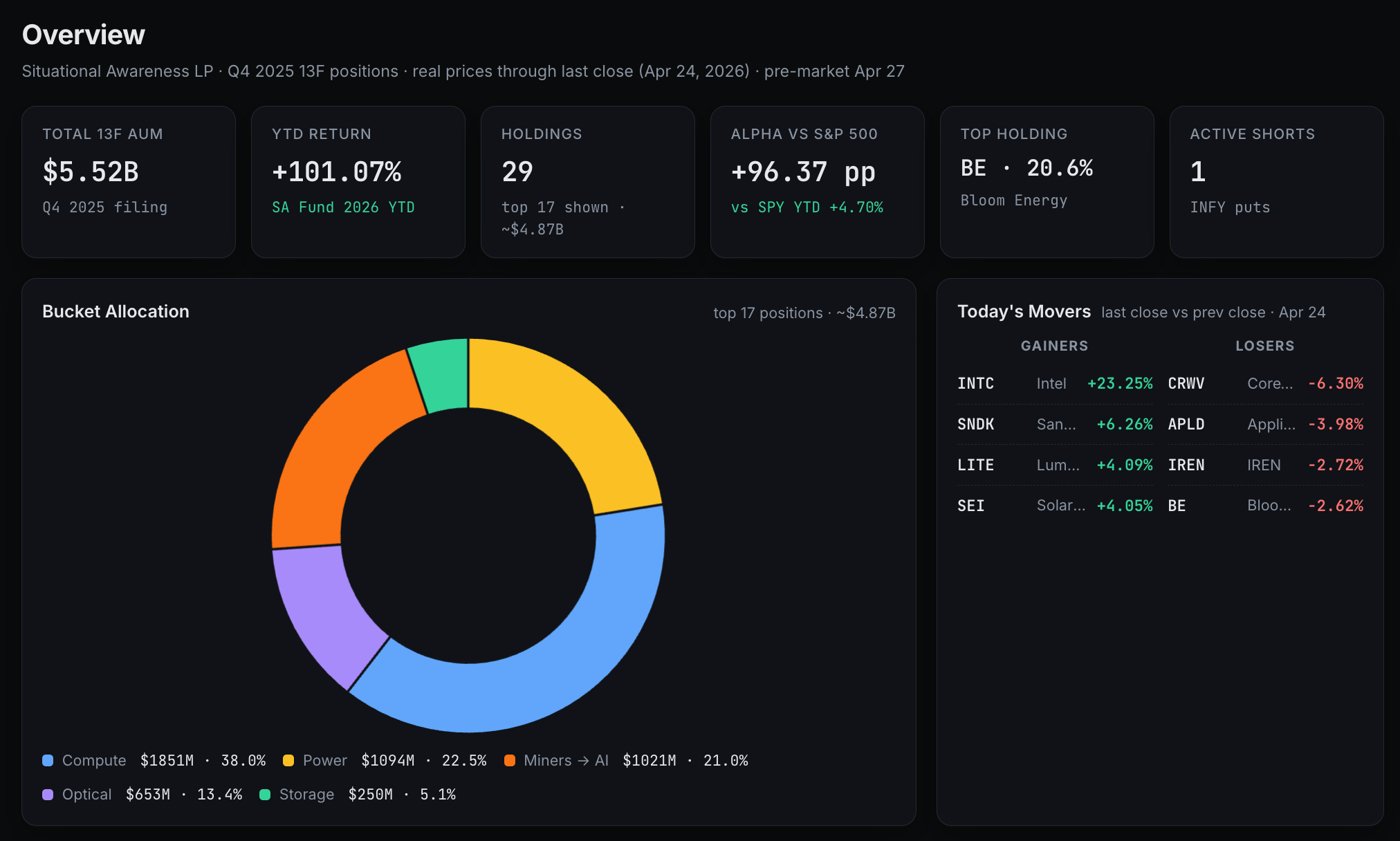
He did it without owning a single share of Nvidia, Microsoft, Amazon, Google, or Meta. His largest position was in a fuel-cell company. His second-largest was call options on a GPU cloud startup most investors had never heard of. His third-largest was call options on a chipmaker Wall Street had largely written off.
This is not a story about luck. It is a story about what happens when a mind trained in growth economics, existential risk theory, and AI scaling laws is given access to public markets and the conviction to act on conclusions everyone else considers too extreme to take seriously.
The Man Behind the Thesis
Leopold Aschenbrenner didn’t set out to run a hedge fund. He set out to understand how the world ends, and then figure out how to invest in the companies that would prevent it.
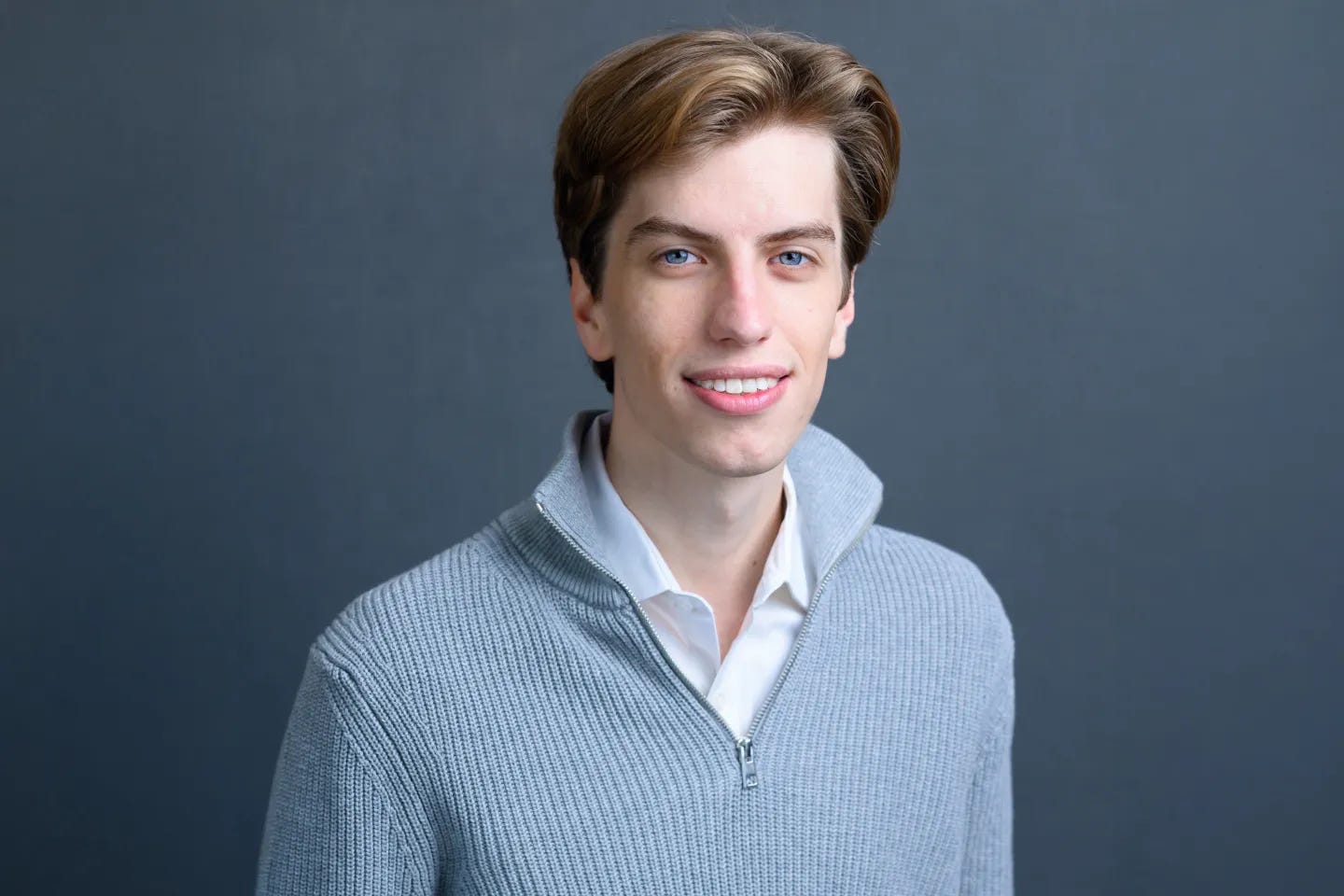
Born in Germany around 2001 to two medical doctors, he enrolled at Columbia University at fifteen. In 2021, at nineteen, he graduated as valedictorian with a double major in economics and mathematics-statistics, the same year he won a grant from Tyler Cowen’s Emergent Ventures. He did research at Oxford’s Global Priorities Institute alongside Philip Trammell, co-authoring a growth-economics paper that would later become the philosophical licence for his entire fund.
He interned at the FTX Future Fund, the philanthropic arm of Sam Bankman-Fried’s empire, and watched from the inside as one of the most spectacular coordination failures in recent financial history imploded. He resigned before the collapse. He then joined OpenAI’s Superalignment team in 2023, co-authored a paper on AI safety presented at a leading machine learning conference, and wrote an internal memo to the OpenAI board warning about Chinese espionage and the company’s security posture. OpenAI fired him in April 2024.
Two months later, he published Situational Awareness: The Decade Ahead, a 165-page essay series making a single sweeping claim: AGI is coming by 2027, the world is not ready, and the companies building the physical infrastructure to make it possible are the most undervalued assets in financial markets.
Ivanka Trump shared it. It went viral.
Within months, he raised anchor capital from Patrick and John Collison (Stripe co-founders), Daniel Gross, and Nat Friedman. One anchor LP told Fortune that Aschenbrenner pitched the fund by rejecting a venture-capital structure: AGI was going to be so consequential to the global economy that the only way to fully capitalise on it was to express investment ideas in the most liquid markets in the world. Public markets over private, because public markets scale with conviction and re-price faster.
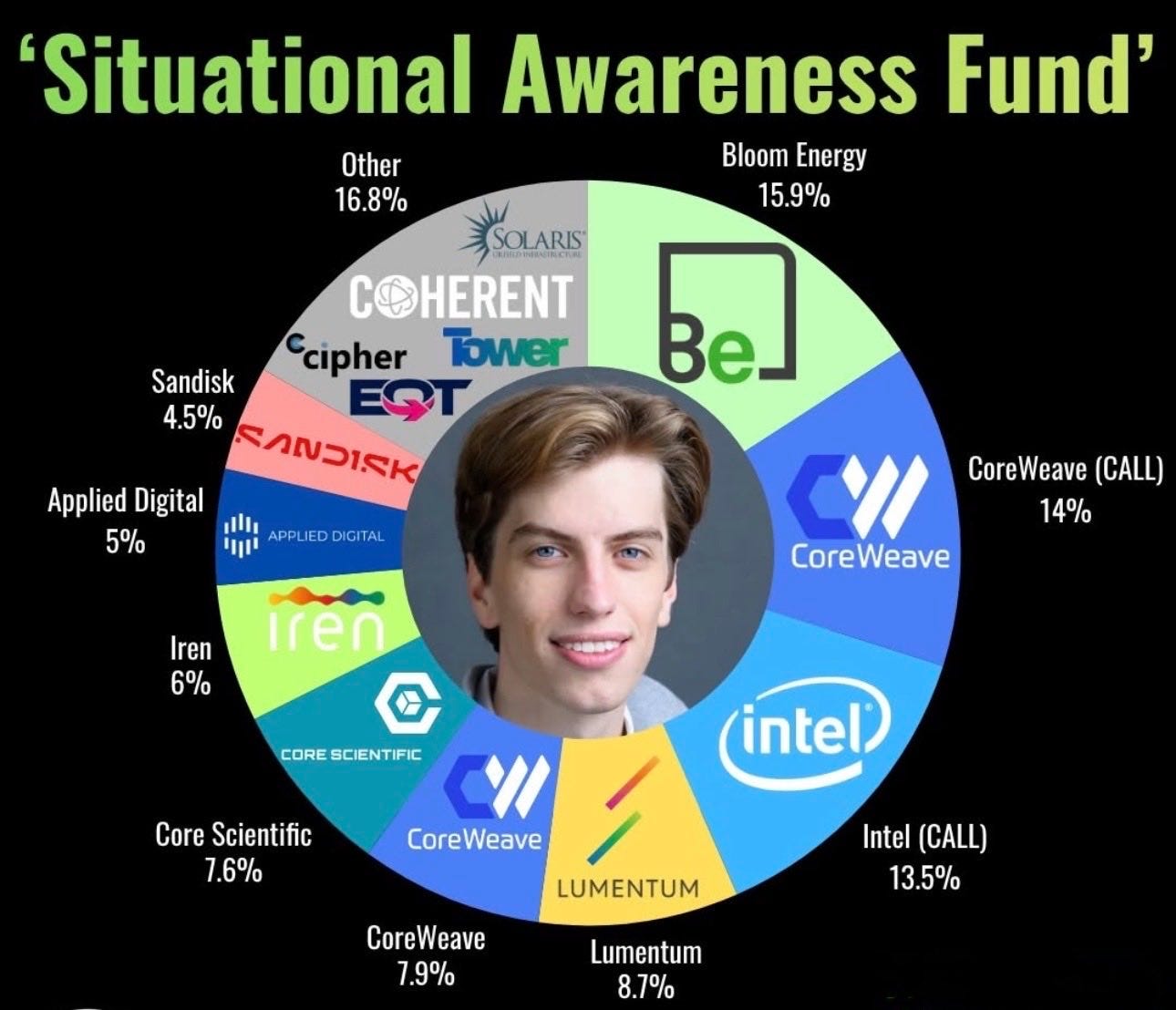
Twelve months later, the fund’s 13F disclosed $5.52 billion in U.S. equity positions across 29 holdings. Let that sink in.
The Core Thesis
The One-Sentence Version: AGI is a 2027 event; superintelligence is a 2028–2030 event; the markets have not priced in either the exponential trendlines or the industrial mobilisation they require. Therefore: buy the bottlenecks of the buildout (power, compute, memory, optics, fabs) and short what AI eats.
What This Deep Dive Covers & Why It Matters
Most coverage of Leopold Aschenbrenner focuses on the headline number - 22-year-old, fired, now manages billions - and stops there. That framing is interesting but useless.
What actually matters is the architecture of thinking that generated those returns: the intellectual framework that turned a philosophical bet about artificial intelligence into one of the most concentrated, contrarian, and precisely sequenced portfolios in the hedge fund industry.
This deep dive goes several layers deeper:
The academic paper almost no one cites - a plain-English explanation of the Trammell-Aschenbrenner paper Existential Risk and Growth, co-authored with Stanford’s Digital Economy Lab, and why its core result (that the risk-minimising rate of technological growth is typically positive and often high) is the philosophical licence for the entire portfolio. It is the direct intellectual foundation for every position the fund has ever taken.
The 165-page manifesto decoded - the five core claims of Situational Awareness: The Decade Ahead, including the precise “Counting the OOMs” framework Aschenbrenner uses to forecast AGI by 2027, the three compounding vectors (compute, algorithmic efficiency, and “unhobbling”), and the specific test-time compute insight that explains the transition from chatbot to drop-in remote worker.
Quarter-by-quarter portfolio evolution - five quarters of 13F data dissected, from the first $254.8M, six-holding filing in Q4 2024 to the $5.52B, 29-holding book filed in February 2026. When did he pivot from semiconductors to power to Bitcoin miners? Why did he simultaneously short the entire semiconductor sector while remaining long Intel and Broadcom? And the DeepSeek moment in January 2025 - when everyone else panicked, and he bought.
The full portfolio breakdown - every position mapped to its thesis layer (electrons, compute, silicon, optics, memory, shorts), the activist 13D stake in Core Scientific, the Intel call-options bet decoded, the Bloom Energy fuel-cell play that Oracle just validated at 2.8 gigawatts, and the two private market moves the 13F doesn’t show.
A live portfolio tracker - a tool I built with Perplexity Computer to track Situational Awareness LP’s positions in real time as new 13F filings drop, along with the whole prompt to recreate it yourself.
The seven-rule reusable playbook - the complete framework, distilled from the thesis, the filings, and all available transcripts, that any investor, founder, or operator can apply to any technology S-curve, not just AI. The same logic that identified power companies and Bitcoin miners as the 2024–2025 winners can be applied to find the 2026–2028 equivalents - in robotics, in synthetic biology, in the physical supply chains of whatever comes after large language models.
The honest risk register - six specific ways this thesis breaks down (including the 14:1 implied leverage ratio most coverage never mentions), and the six signposts you should be watching to know whether it’s still working.
Every major technology wave has a set of physical constraints that are obvious in retrospect but invisible to most market participants in real time. Aschenbrenner made them visible - and bet on them before the crowd arrived.
Understanding exactly how he did that is worth more than any single stock tip.