

👋 Hey, Linas here! Every day, I break down 3 stories shaping the future of FinTech & Artificial Intelligence - plus the money movements and trends worth tracking. First time here? 399k+ FinTech and AI leaders get this daily. Join them:
For over a decade, “solo founder” was startup shorthand for “couldn’t find a co-founder.” Investors read it as a risk flag. Accelerators nudged applicants to pair up. The entire venture playbook assumed that building something valuable took a team, because a team was the only way to cover everything a company needs done: code, sales, design, support, books.
That assumption is now measurably wrong. Solo-founded startups grew from 23.7% of new US ventures in 2019 to 36.3% by mid-2025 (Forbes). On Stripe Atlas, solo founders accounted for 63% of new C corporations formed in the second quarter of 2026, an all-time high.
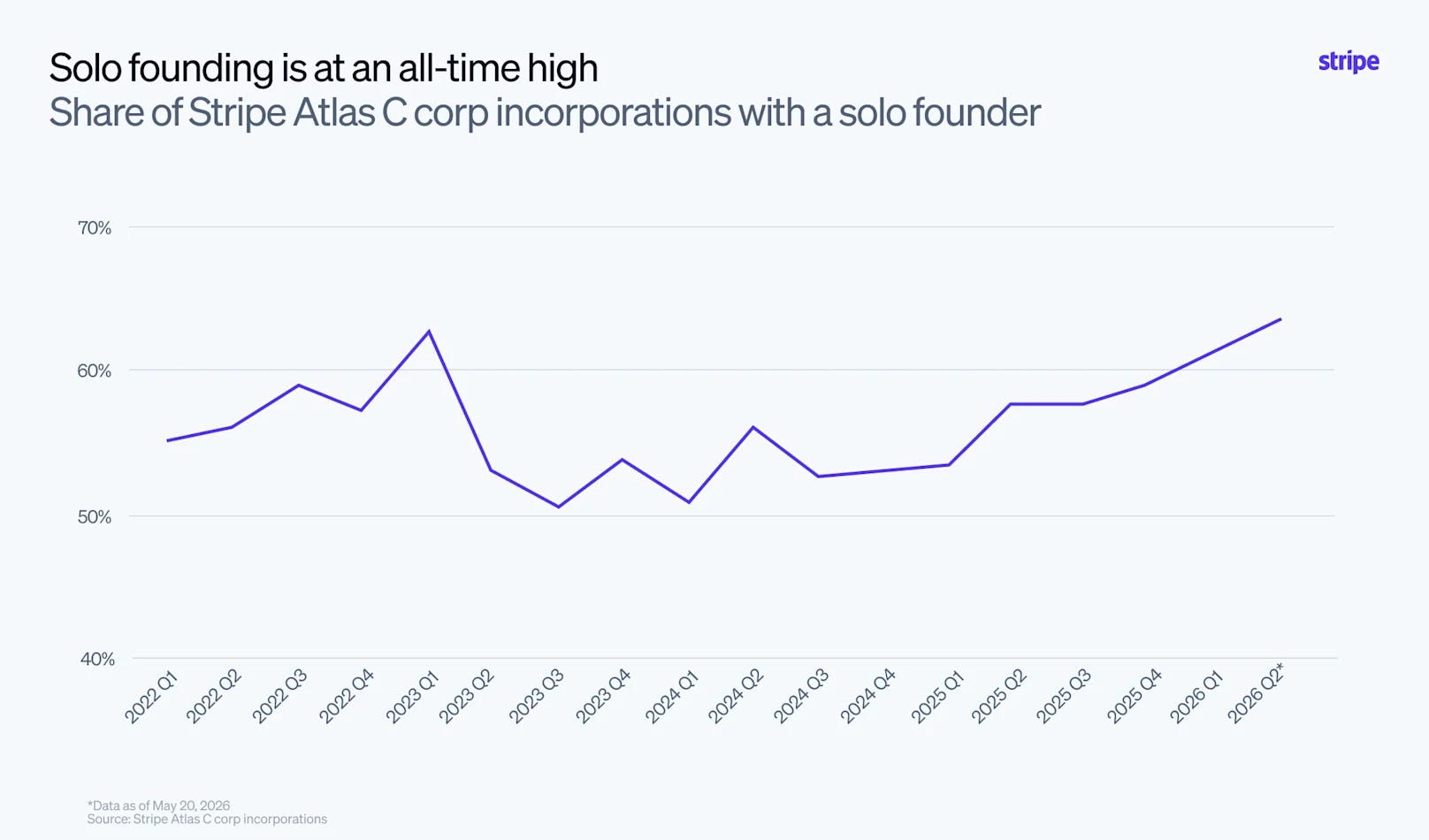
Carta puts solo founders at 36% of all startups incorporated on its platform in 2025, roughly double the share of a decade earlier.
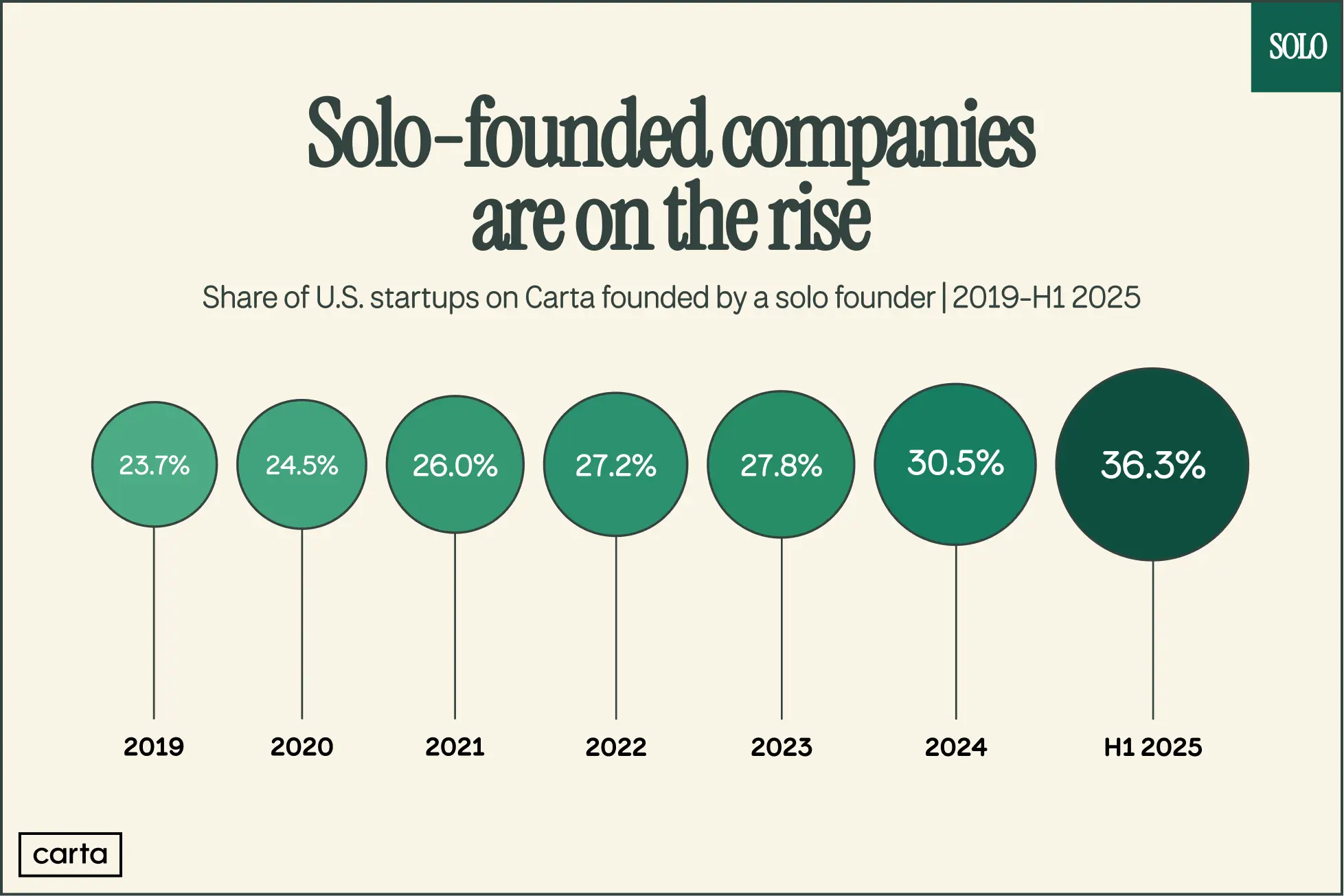
Different platforms, different populations, same trajectory.
The solopreneur economy is therefore a clear structural change in how companies get built, and it changes what founders should be optimizing for over the next few years.
Here’s what we’re getting into today: the $80 million solo exit and the venture funds now backing one-person companies; the formation data across the US and Europe showing this is not another pandemic-style blip; the 61x revenue gap between top-decile solo founders and the median, and the specific habits behind it; why AI-native solo startups generate nearly twice the revenue of their peers by year 2; where the one-person model breaks down; and the 3 places the next opportunity is actually forming.
To make this even more valuable and actionable, and so that you can go straight from reading to building, we’re also sharing the playbooks that pair with it:
Anthropic, which just told AI founders exactly what to build in 2026 (full founder playbook + where Anthropic’s own products will & won’t compete)
The complete guide to QM, Y Combinator’s open-source AI agent harness
The top 100 AI and tech investors of 2026, and how to reach them
One person with the right stack can now outcompete a team of 20. Everything below, the full analysis and every playbook above, exists to make sure that person is you.