
Visa & Mastercard’s Agentic AI payment platforms have a volume problem 🤖📊; Vinyl raised $20M to replace the fax machines that track every public share 📠💸; Revolut’s secret ECB restrictions 👀🔔
FinTech is Eating the World, 11 June

Hey Everyone,
Good morning & happy Thursday! Today’s issue is incredibly packed as we’re diving deep into finance giants Visa & Mastercard, both of which just launched agentic AI payment platforms (what it’s all about, why it matters & why payment titants have a volume problem here + bonus reads into other Visa & Mastercard’s agentic AI moves, & how Google wants to be the OS for all commerce inside), Vinyl that just raised 20M to replace the fax machines in the public markets (what’s the USP here, why it’s interesting, and what to watch for next + bonus looks into the IPOs of OpenAI, Anthropic, & the list of top AI & Tech VCs of 2026 inside), and Revolut’s secret ECB restrictions (what happened, why it didn’t hurt the valuation, but could hurt the IPO + bonus dive into Revolut’s latest financials, & deep dive into their AI model for money inside). So let’s jump straight into the finnovative stuff 🌶️
Visa and Mastercard’s Agentic AI payment platforms have a volume problem 🤖📊

The news 🗞️ On June 10, finance giants Visa V 0.00%↑ and Mastercard MA 0.00%↑ each launched agentic AI payment platforms.
→ Visa embedded payments into OpenAI’s ChatGPT and built an Agentic Directory of verified agents.
→ Mastercard shipped Agent Pay for Machines, infrastructure that provisions AI agents as autonomous economic actors with their own credentials, wallets, and on-chain spending limits.
The simultaneous timing was read by most as defensive urgency: two incumbents scrambling to protect a combined $1.05 trillion market cap from an agentic economy forming outside their rails on open stablecoin protocols like x402.
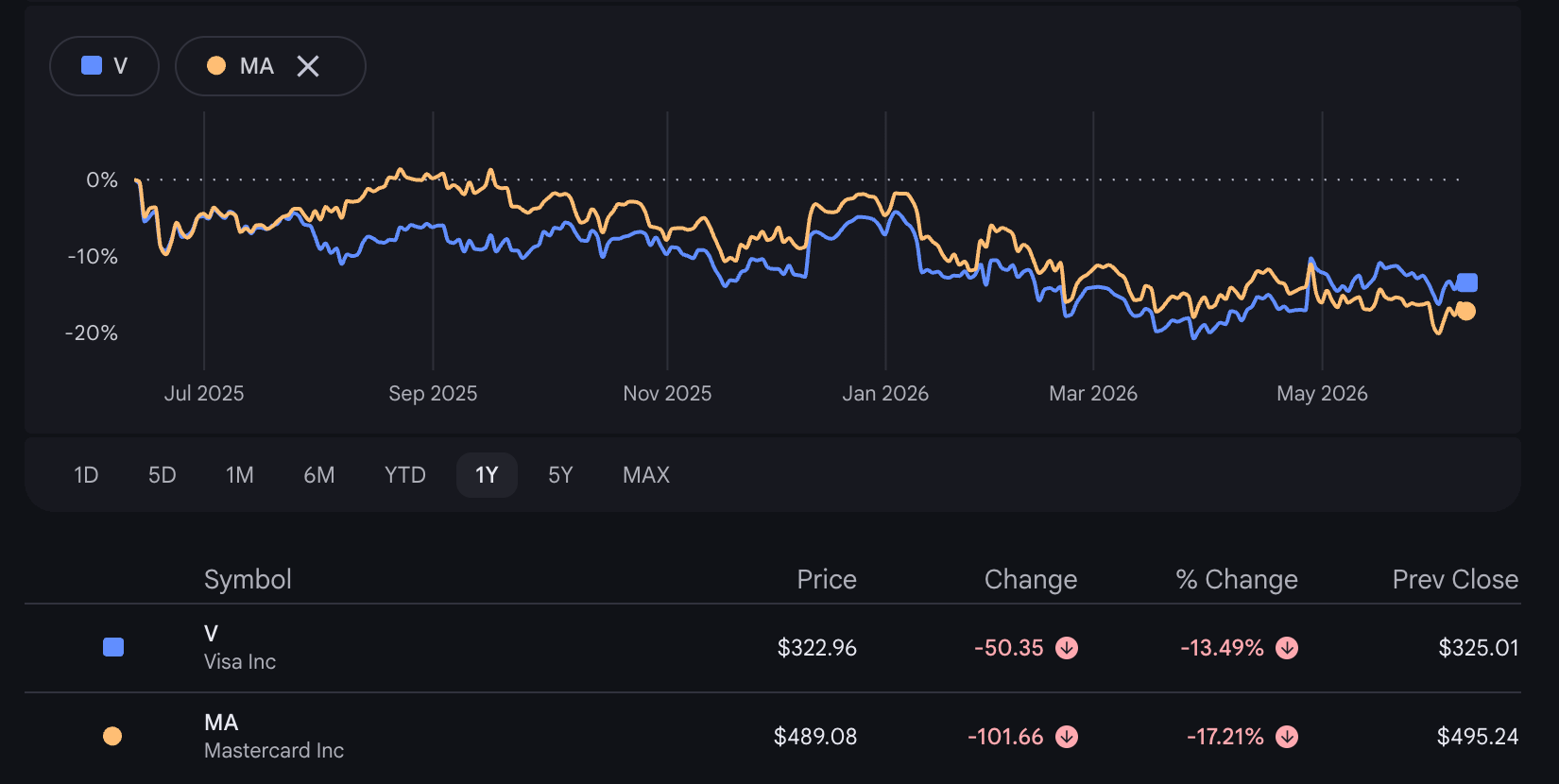
That framing is popular. It may also be wrong.
By far the most instructive number here is not even in either press release. It’s in the x402 on-chain data itself: a speculative spike above 5 million daily transactions in late 2025, driven largely by wash trading and meme coin farming, followed by a collapse to near-zero by spring 2026.
Thus, the agentic payment economy both networks are now racing to govern barely exists yet. Here’s what that means for their strategies, their margins, and who actually wins.
