
These AI Startups Just Raised $187M, and They Reveal Exactly Where the Market Is Headed 🚀
These founders secured $187M in Q1 2026. We analyzed their pitch decks, VC backing, and business models to uncover the patterns every AI founder & investor should know 💸

👋 Hey, Linas here! Welcome to another special issue of my daily newsletter. Each day, I focus on 3 stories that are making a difference in the financial technology space. Coupled with things worth watching & the most important money movements, it’s the only newsletter you need for all things when Finance meets Tech. If you’re reading this for the first time, it’s a brilliant opportunity to join a community of 370k+ FinTech & AI leaders:
The Q1 2026 Funding Landscape: Where the Money Is Going
February 2026 was the largest startup funding month ever recorded. Global venture capital hit $189 billion in a single month, with AI-related companies accounting for $171 billion of that total, according to Crunchbase. To put that in context: January 2026 saw $55B in global VC, more than double the $25.5B raised a year earlier. AI captured 57% of January’s capital. By February, it consumed 90% 😳
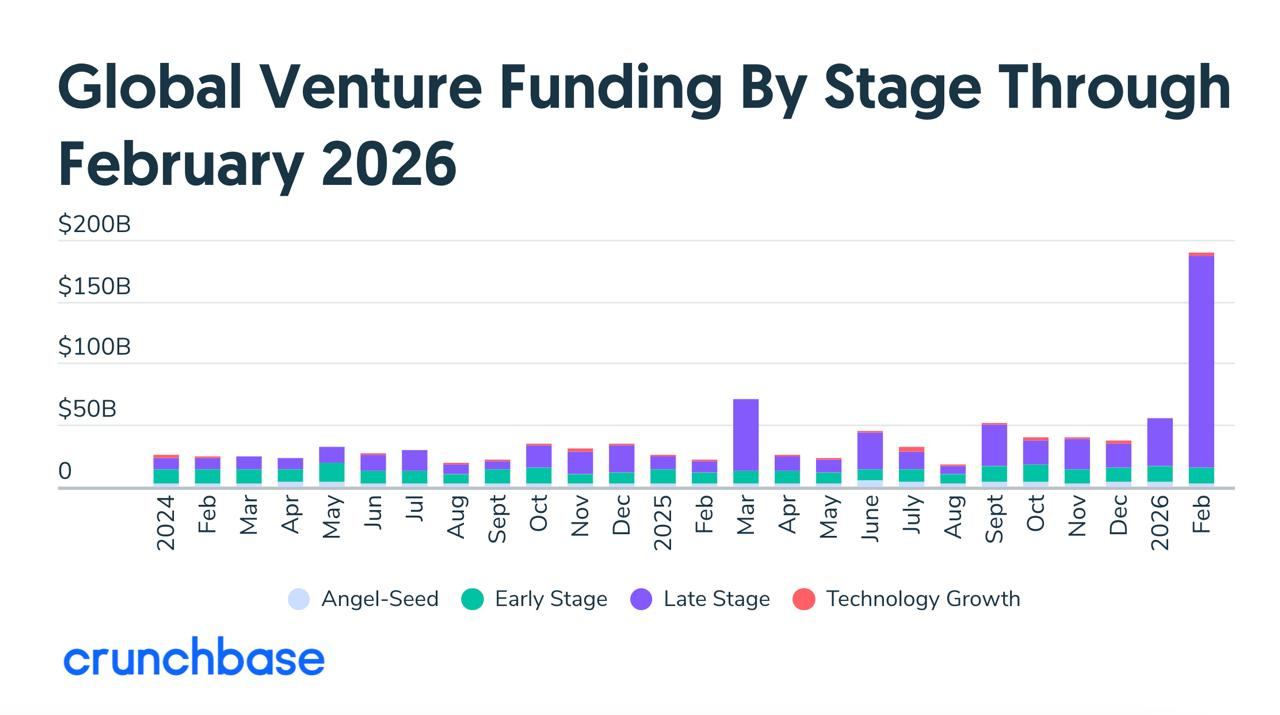
But the headline number obscures a critical detail. 83% of February’s capital went to just three companies: OpenAI ($110B), Anthropic ($30B), and Waymo ($16B). Strip those out, and the remaining thousands of AI startups split roughly $18 billion. So the concentration is extreme and accelerating.
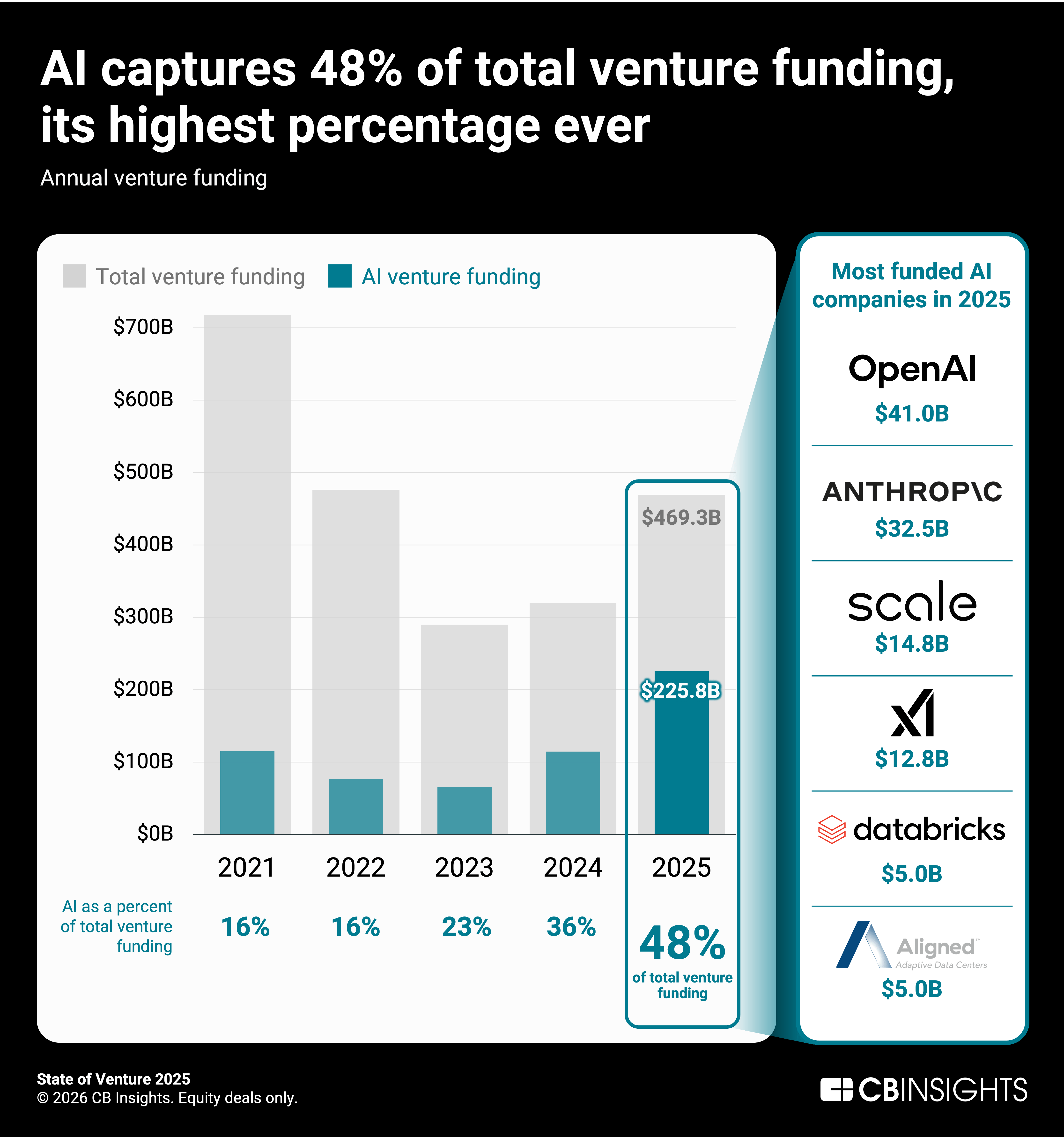
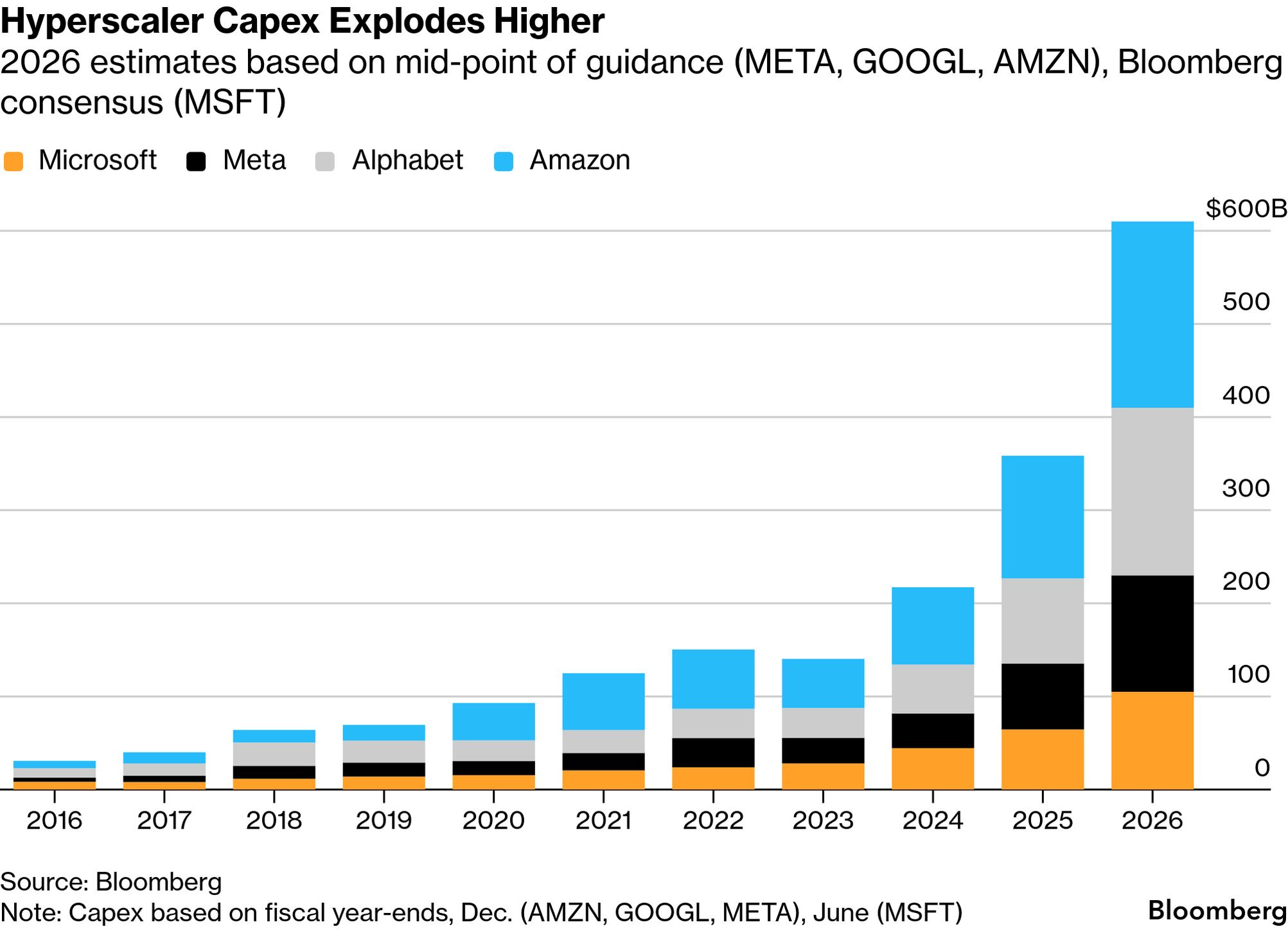
But the trend did not start this year. In 2025, AI companies captured 65.6% of all US VC deal value, or $222 billion out of $339 billion total, according to PitchBook-NVCA data. That share was 47.2% in 2024 and just 10% in 2015. Big Tech is doubling down: Bridgewater estimates that major technology companies will invest roughly $650 billion in AI in 2026, up from $410 billion in 2025. Let that sink in.
In the first 6 weeks of 2026, 17 US AI companies raised $100M+ rounds, with 3 crossing $1 billion. Per Crunchbase, over 40% of seed and Series A investment has gone to rounds of $100 million or more. Median seed post-money valuations reached an all-time high of $24 million in Q4 2025, up from $18 million a year earlier, according to Carta. Median Series A post-money valuations hit $78.7 million. AI startups command a 42% valuation premium at the seed stage compared to non-AI peers.
So the market is clearly K-shaped.
The top 10% of US startups on Carta that closed a round in 2025 raised roughly 50% of all capital. The bottom 50% raised just 14%. If you are building something generic, the math does not work. If you are building something deeply differentiated with proprietary data and real traction, the capital is there, and the valuations are historic.
More importantly, the gap between funded and unfunded has never been wider. The question is now what happens when this much capital concentrates this fast. We explored the second-order consequences of that concentration, and what it means for the broader economy, in The 2035 Global Intelligence Crisis.

What Investors Have Stopped Funding
Every funding cycle has its casualties. In Q1 2026, the signal from top-tier VCs is unambiguous: the era of the thin wrapper is over ❌
What’s Dead
Thin workflow layers. Generic horizontal tools. Light product management software. Surface-level analytics. Basic CRM clones. Workflow automation that coordinates humans. Anything an AI agent can now do itself.
What’s Alive
AI-native infrastructure. Vertical SaaS with proprietary data moats. Systems of action, not just systems of record. Platforms embedded in mission-critical workflows. Businesses that own the workflow, the data, and the domain expertise. The common thread is crystal clear: depth, not breadth. Ownership, not orchestration of humans ✅
And the implications run deeper than a preference shift. Integration used to be a competitive advantage. Connecting disparate tools was hard, and companies that did it well built real moats. That’s changing fast.
Sequoia’s Julien Bek framed this most sharply: the next great company won’t sell tools to professionals. It will sell the completed work directly to the end buyer. For every dollar spent on software, six are spent on services, and AI can now capture the labor budget, not just the software budget. But as we explored in our breakdown of Sequoia’s “Services: The New Software” thesis, the trillion-dollar framing has a $0.03 problem. When machines do the work, the work gets repriced at machine rates, and labor budgets don’t migrate to AI vendors. They evaporate. The 10 startups below are navigating exactly this tension.

Why These 10 Startups
Every startup covered below raised capital in Q1 2026, between January 1 and March 16. All have their exclusive pitch decks inside, offering rare transparency into how founders actually pitch investors. They are ranked by funding amount, from largest to smallest. Combined, they raised approximately $187 million.
These are not the billion-dollar mega-rounds that dominate headlines. They are the signal in the noise: companies raising $4.5M to $42M, building in specific verticals, and solving problems that the market is only beginning to understand. Studying their pitch decks reveals how the best founders frame their markets, demonstrate traction, and position themselves in a capital environment that rewards depth and punishes generality.
To make it even more actionable, I’m also sharing an exclusive list of top AI startups from 2025 and 2026 (& their pitch decks), a curated list of the top 100 Seed Investors from 2025, how I built an AI operating system to run a startup with Claude, and one file that turns Claude Code into your CTO. It has everything you need to build the next unicorn in 2026 🦄