
ChatGPT’s new personal finance feature is OpenAI’s bid to kill the fintech app economy 🤖📲; Revolut is rebuilding its revenue mix before anyone sees the S-1 🤑🏦
FinTech is Eating the World, 19 May

Hey Everyone,
Good morning & happy Tuesday! Today we’re diving deep into OpenAI, whose new personal finance features inside ChatGPT is a bid to kill the FinTech app economy (what it’s all about, which fintechs should worry the most, how it connects to OpenAI’s Super App Play & what’s next + bonus deep dives into Anthropic & how it’s becoming Wall Street’s OS, their SME OS play, and what AI startup founders should build in 2026), and fintech giant Revolut that’s actively rebuilding its revenue mix before the IPO (two interesting moves from Europe’s most valuable startup, what they tell us & what’s next + bonus deep dives into Revolut’s latest 2025 financials & foundational AI model PRAGMA inside). Let’s jump straight into the incredible stuff 🌶️
ChatGPT’s new personal finance feature is OpenAI’s bid to kill the fintech app economy 🤖📲
The news 🗞️ The fastest way to destroy a software category is to make it a feature inside something everyone already uses.
OpenAI just connected ChatGPT to 12,000 banks and brokerages. Chase, Fidelity, Schwab, Robinhood HOOD 0.00%↑, AmEx AXP 0.00%↑ - all feeding real transaction data into a conversational AI layer powered by GPT-5.5. For the hundreds of millions of users already asking ChatGPT money questions, the answer now comes grounded in their actual spending, investments, and liabilities.
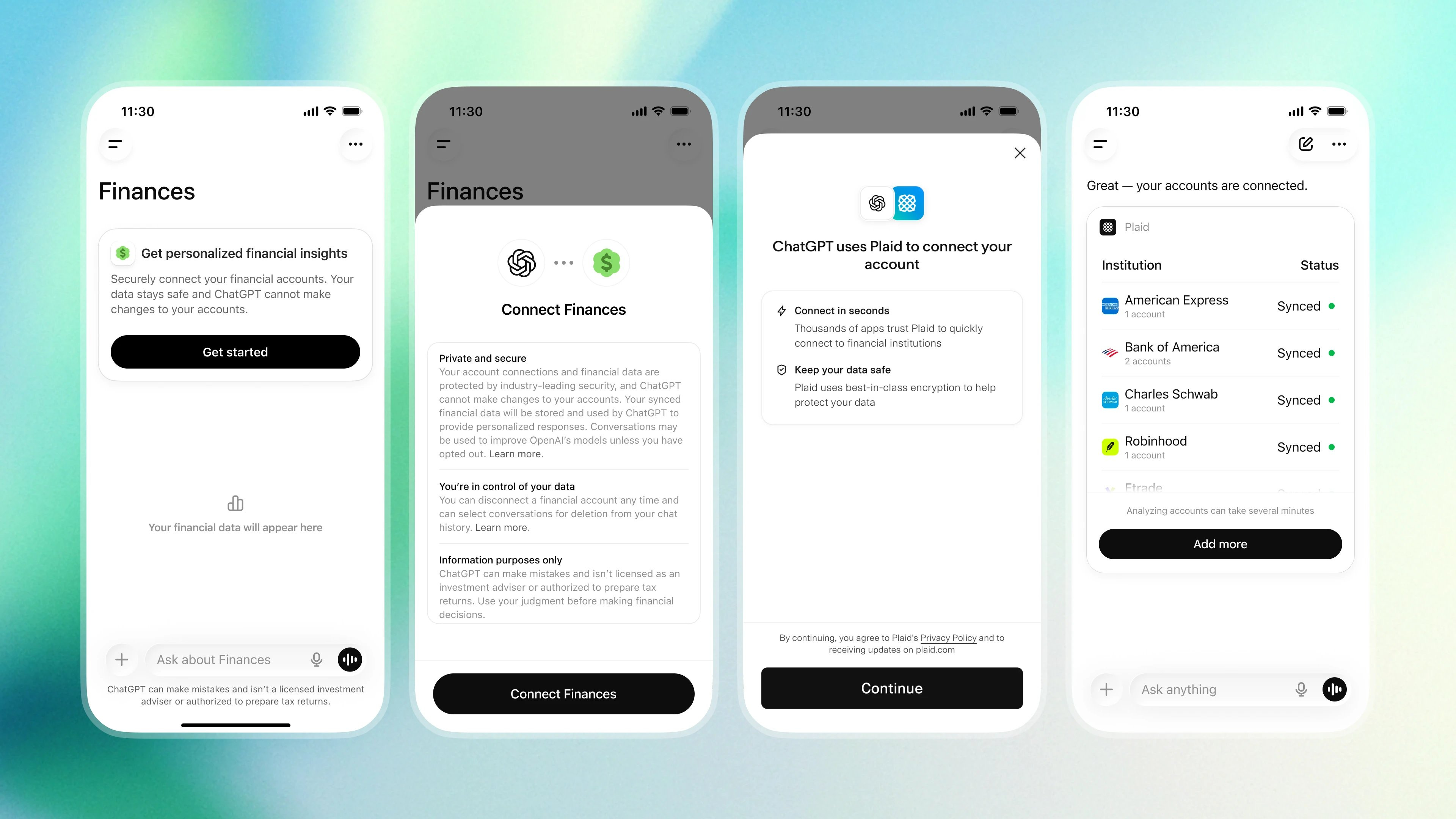
For every fintech startup that built an AI budgeting app on top of Plaid over the past three years, the threat is now existential. And for the broader AI industry, this is the clearest signal yet of where the Super App race is heading: whoever owns your financial context owns the most defensible consumer relationship in tech.
Let’s take a closer look at this, break down who this kills, who survives, what Anthropic’s opposite bet tells us about where AI finance is actually going, and the second-order regulatory and competitive dynamics most are missing.
