
Wyoming launches first state-backed stablecoin 😳🪙; In just 5 years, Revolut completely disrupted Lithuanian banking landscape 🏦🇱🇹; Robinhood’s AI-powered investment insights launch in UK 🇬🇧🤖
You're missing out big time... Weekly Recap 🔁

👋 Hey, Linas here! Welcome back to a 🔓 weekly free edition 🔓 of my daily newsletter. Each day, I focus on 3 stories that are making a difference in the financial technology space. Coupled with things worth watching & most important money movements, it’s the only newsletter you need for all things when Finance meets Tech.
If you’re not a subscriber, here’s what you missed this week:
The Agentic AI Survival Guide 🤖📚 [from autonomous workflows to enterprise-grade security & strategy, these resources will take you from curious observer to informed builder in the age of Agentic AI]
The Ultimate List of Resources about Stablecoins 🪙 [your one-stop resource list for understanding the most disruptive force in global finance]
AI Agents & MCPs Starter Pack: 10 Curated Repos to Learn, Build, & Scale Autonomous Agents 🤖 [from zero to builder - this toolkit has everything you need to master the agentic future of AI]
Agents 20: Top AI Agent Startups of 2025 🤖💸 [these AI Agent startups are defining 2025. Find who's backing them, unlock their exclusive pitch decks, and learn from the best]
Nubank’s Q2 2025, or why Latin America's digital banking emperor is the FinTech investment steal of the decade 😤📈 [deep dive into NU’s financials, what they mean, what’s next & why you just can’t be not bullish on NU 0.00%↑]
Gemini IPO: not convincing enough 🤷♂️🔔 [deep dive into their S-1 filing, uncovering the most important facts & figures, what they mean and what’s next for the Winklevoss twins’ crypto platform]
Klarna's Q2 2025: a compelling AI-powered growth story hidden behind credit concerns 💳📈 [deep dive into their latest financials, uncovering the most important facts & figures, what they mean & what’s next for Klarna + bonus deep dives & the Agentic AI Playbook for Finance inside]
MetaMask enters the stablecoin arena with mUSD 🦊🪙 [what’s the rationale here and why it might actually makes sense + the ultimate list of stables resources inside]
Citi is exploring custody & payment services for stablecoins, and crypto ETFs 😳🪙 [what it’s all about, why it makes sense & what’s next for FinTechs & banks + bonus deep dives into Citi, crypto custody king Coinbase, and their latest financials + the ultimate list of stablecoin resources inside]
CommBank reverses plan to replace staff with AI 🤷♂️🤖 [what happened and what can we learn from this + bonus list of top AI Agent startups in 2025 & the agentic AI playbook for finance inside]
The world's first 50% stablecoin IPO 😳🪙 [what happened & what it indicates + bonus take on Bullish’s IPO & the ultimate list of stablecoin resources inside]
The AI Code has been cracked: welcome to new, AI-first reality 🤖 [AI's experimental phase just ended. This new report reveals the hard data behind a new economic reality, and why most are already playing catch-up]
The Ultimate B2B Growth Playbook for 2025 🚀 [nail your targeting, supercharge your outbound strategy, and close deals with confidence]
As for today, here are the 3 great FinTech stories that are changing the world of financial technology as we know it. This was yet another fascinating week in the financial technology space, so make sure to check all the above stories.
Wyoming launches first state-backed stablecoin 😳🪙

The news 🗞️ Wyoming has just established itself as the first U.S. state to successfully launch a government-issued stablecoin.
The Frontier Stable Token (FRNT), which went live on mainnet August 19, 2025, represents a bold experiment in modernizing government financial operations while challenging the traditional boundaries between public and private digital assets.
Let’s take a quick look at this.
More on this 👉 The FRNT operates as a digital representation of the U.S. dollar, maintaining a one-to-one peg through full backing by U.S. dollars and short-duration Treasury securities. Unlike private stablecoins that have faced scrutiny over reserve transparency, Wyoming mandates a 102% collateralization ratio, providing an additional safety buffer. The Wyoming Stable Token Commission, operating with a $5.8 million state budget, oversees the token's operations with monthly third-party attestations ensuring full reserve backing.
What sets this initiative apart is its comprehensive infrastructure and immediate real-world utility. The token launches across seven major blockchain networks, including Ethereum, Solana, and Avalanche, utilizing LayerZero's technology for seamless cross-chain transfers. Through partnerships with payment processor Rain and exchange Kraken, FRNT holders will be able to spend their tokens anywhere Visa is accepted, including through Apple Pay and Google Pay integrations.
Zoom out 🔎 The timing proves strategic, coming just one month after President Trump signed the GENIUS Act establishing federal stablecoin regulations. Interestingly, the legislation's definition of "person" appears to exempt state governments from certain federal oversight requirements that apply to private issuers, potentially giving state-backed tokens unique regulatory advantages.
But Wyoming's ambitions extend beyond simple payment processing.
The state envisions using FRNT to revolutionize government operations, from instantaneous tax refunds to streamlined vendor payments. Interest generated from the Treasury holdings could create new revenue streams for public education, demonstrating how blockchain technology might enhance rather than replace traditional government funding mechanisms.
✈️ THE TAKEAWAY
What’s next? 🤔 Wyoming's successful launch will likely catalyze a domino effect across the stablecoin landscape. Several states, including Nebraska and Texas, are already exploring similar initiatives, suggesting we may see a proliferation of state-backed digital currencies within the next two years. This development fundamentally alters the stablecoin competitive dynamics, introducing government-backed alternatives that could pressure private issuers like Circle CRCL 0.00%↑ and Tether to enhance transparency and reserve management practices. Interestingly enough, the hybrid public-private model Wyoming employs - leveraging private sector infrastructure while maintaining government oversight - offers a compelling middle ground between fully decentralized cryptocurrencies and central bank digital currencies. This approach could become the template for democratic nations seeking to modernize financial infrastructure without ceding control to either private corporations or creating overly centralized federal systems. Looking ahead, the success of FRNT will likely depend on achieving critical mass adoption and demonstrating tangible efficiency gains in government operations. If Wyoming can show measurable cost savings and improved service delivery, expect federal agencies to take notice. We may see pressure for a federal framework allowing state-issued stablecoins to interoperate, potentially creating a new tier of quasi-governmental digital assets that could reshape both domestic payments and international dollar liquidity. Interesting times ahead!
ICYMI: Circle’s first earnings as a public company: a digital currency infrastructure play wrestling with questionable valuation reality 🤔📊 [deep dive into Circle’s Q2 2025, breaking down the most important facts & figures, what they mean, and what’s next for the stables giant + bonus deep dives into Coinbase, Chime, and other good resources inside]

In just 5 years, Revolut completely disrupted the Lithuanian banking landscape 🏦🇱🇹

The news 🗞️ The Lithuanian banking sector has undergone a dramatic transformation with UK-based digital bank & FinTech giant Revolut claiming the top position by assets within just 5 years of entering the market.
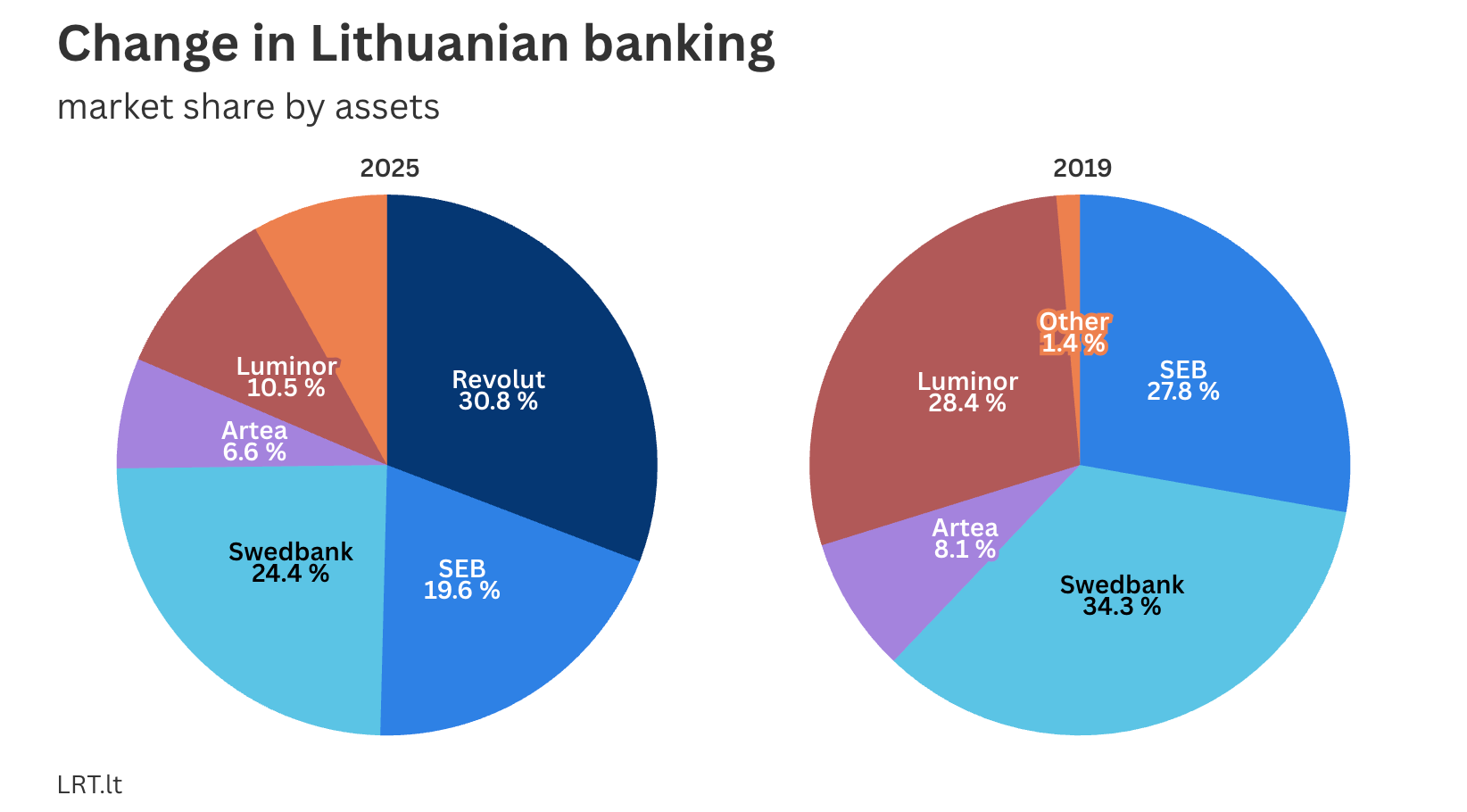
According to Lithuania's central bank data, Revolut now commands a whopping 30.8% of market share by assets, surpassing long-established players Swedbank (24.4%), SEB (19.6%), and Luminor (10.5%). And all of that, in just 5 years… 😳
Let’s take a closer look and unpack this.
More on this 👉 While definitely impressive, this headline figure requires careful interpretation.
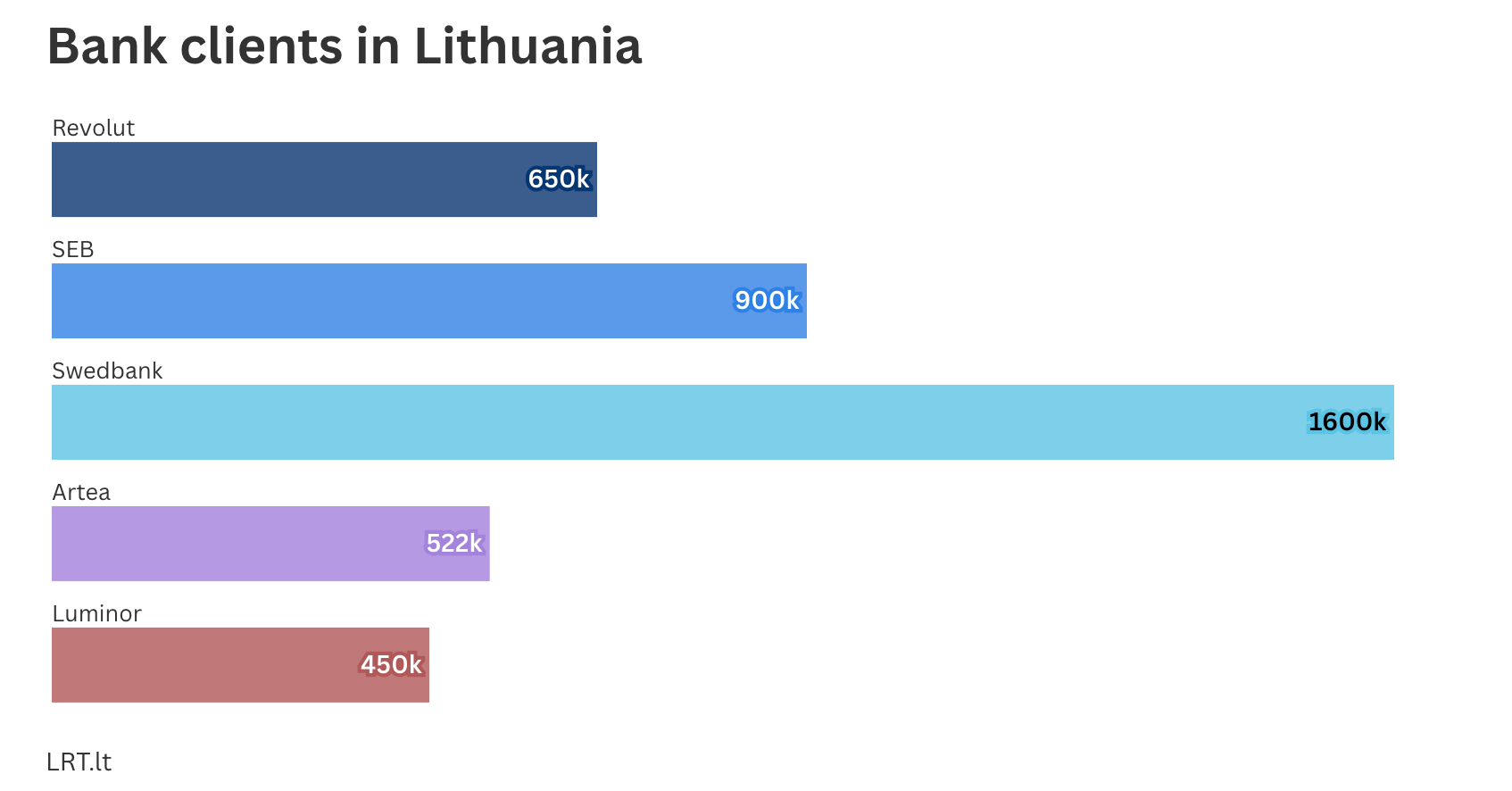
Revolut's asset base includes operations across 30 European Economic Area countries where it serves 40 million customers, leveraging its Lithuanian banking license for pan-European operations. Within Lithuania specifically, traditional banks maintain stronger domestic customer relationships, with Swedbank serving 1.6 million customers compared to Revolut's 650,000. Still not bad for a market that’s less than 2.8M people!
Zoom out 🔎 The disruption comes against a backdrop of historically limited competition in Lithuania's banking sector. President Gitanas Nausėda, who previously worked at SEB Bank, characterized the market in 2019 as having "three and a half banks," insufficient for quality and affordable services. The government has since prioritized attracting new entrants, with Germany's Commerzbank establishing a representative office and two pending applications for specialized banking licenses. Though these will probably be marginal players at best…
Traditional banks have responded to the competitive pressure by expanding their own operations. Swedbank's deposits nearly doubled to €16.8 billion over five years, while SEB's assets grew 79% to €15.2 billion. Artea, recently rebranded from Šiaulių Bankas, has aggressively expanded its housing loan portfolio from €100 million in 2019 to over €1 billion today.
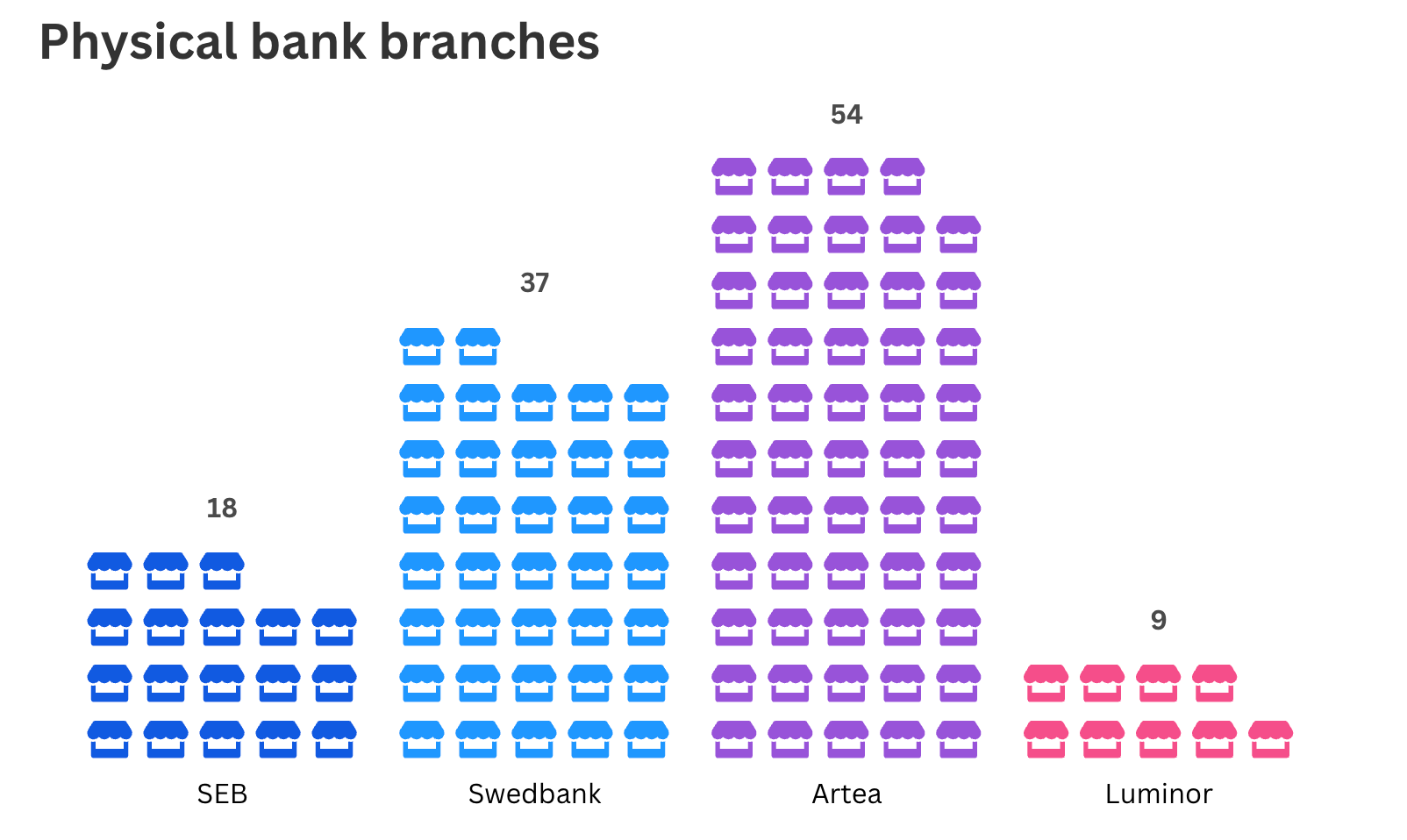
A critical distinction between digital and traditional banks remains physical presence. Lithuania's branch network has contracted from 643 locations two decades ago to just 151 today, raising concerns about banking accessibility in rural areas. Consumer advocates emphasize that banking infrastructure remains essential for business formation, tax payments, and services requiring in-person consultation.
✈️ THE TAKEAWAY
What’s next? 🤔 First and foremost, we must note that Revolut's success in Lithuania represents a broader paradigm shift in European banking, where digital-first challengers are forcing traditional institutions to accelerate their digital transformation strategies. The Lithuanian case study demonstrates how regulatory arbitrage - using a single EU banking license to operate across multiple markets - can rapidly disrupt established market structures. Speaking of Revolut specifically, this achievement strengthens its position ahead of potential public listing plans and validates its strategy of using Lithuania as its European banking hub. More importantly, the company's recent expansion into housing loans in Lithuania signals ambitions to compete across the full spectrum of banking services, not merely payments and basic accounts. Looking ahead, the broader FinTech sector will likely see increased interest in obtaining European banking licenses through smaller EU markets, following Revolut's playbook (cases in point - Gemini getting its licence in Malta or Robinhood HOOD 0.00%↑ establishing its European HQ in Vilnius). This trend could thus accelerate banking consolidation as traditional institutions seek scale to compete with pan-European digital operators while maintaining costly branch networks for segments requiring physical services. The key challenge ahead therefore involves balancing digital innovation with financial inclusion. As branch networks continue contracting, regulators may need to mandate minimum service levels or create hybrid models ensuring rural and elderly populations maintain banking access. Traditional banks that successfully integrate digital capabilities while leveraging their physical presence for complex, high-value services may find a sustainable competitive advantage in this evolving landscape. A brilliant example here is banking giant JPMorgan JPM 0.00%↑ (deep dive on their latest earnings below).
ICYMI: JPMorgan Chase’s Q2 2025: a capital fortress poised for digital assets & stablecoins (r)evolution 😤🪙 [unpacking the key financial facts & figures, what they mean, breaking down JPM’s stables & digital asset strategy, and what to expect next from the banking heavyweight + bonus deep dives into Citi, the ultimate stablecoin resource list & more reads inside]

Robinhood’s AI-powered investment insights launch in the UK 🇬🇧🤖
The news 🗞️ Robinhood HOOD 0.00%↑ has launched its artificial intelligence-driven investment tool, Digests by Robinhood Cortex, to United Kingdom customers, marking another expansion of the platform's AI capabilities beyond its initial United States rollout.
The feature represents the first product powered by Robinhood Cortex, the company's comprehensive AI investing assistant designed to democratize sophisticated market analysis tools.
Let’s take a look at this.
More on this 👉 Digests leverages advanced generative AI technology to synthesize breaking news, analyst reports, technical indicators, and Robinhood's proprietary trading data into concise, plain-English explanations of stock price movements. The tool appears directly within individual stock detail pages and provides users with accessible summaries that decode the factors driving market fluctuations. UK customers can access this functionality without additional cost at launch, continuing Robinhood's tradition of eliminating barriers to investment information.
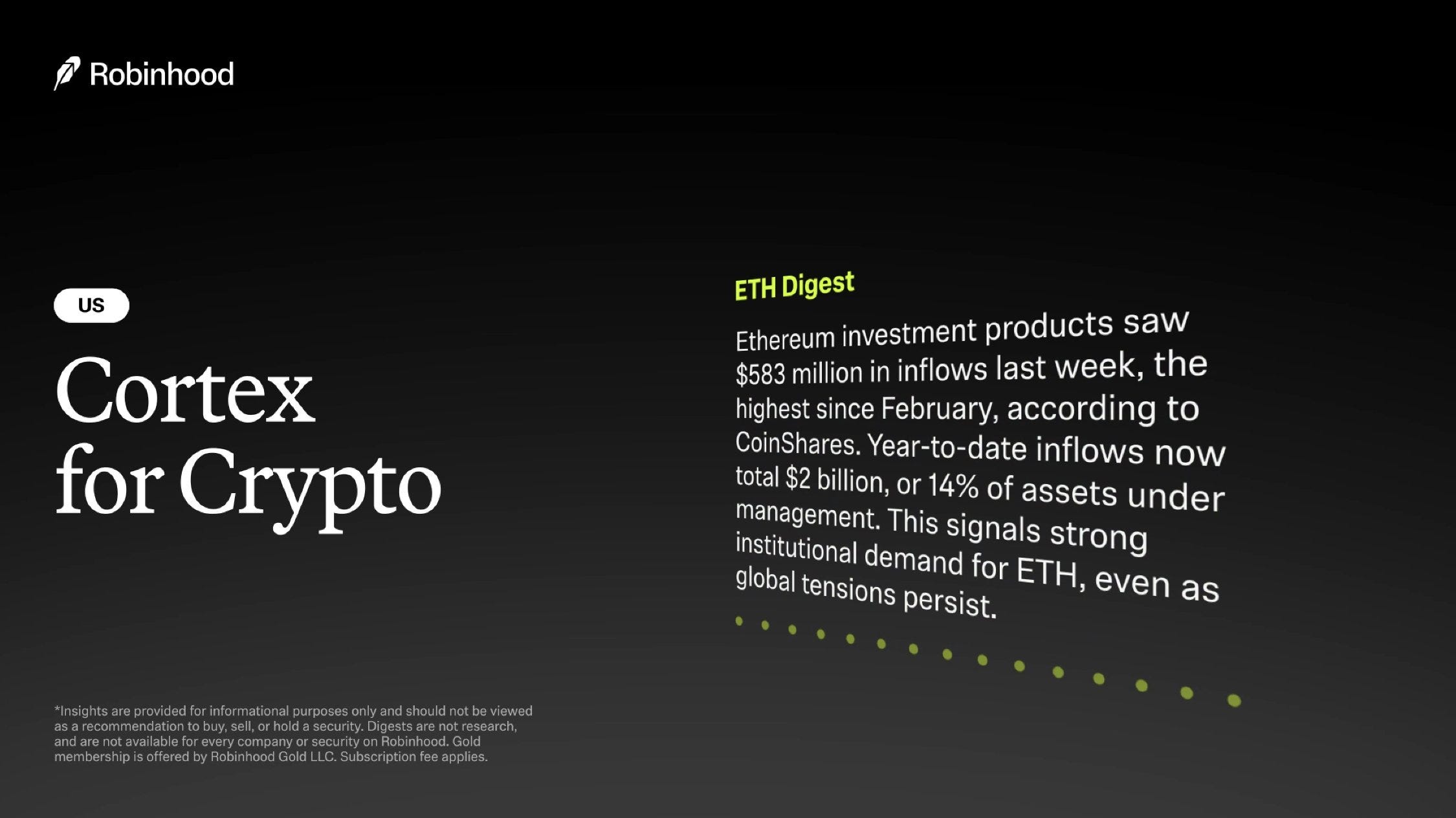
The AI assistant has demonstrated strong market acceptance since its summer launch in the United States, where hundreds of thousands of customers have adopted the feature. User satisfaction metrics indicate that 95% of surveyed American users appreciate the tool's clarity, relevance, and ease of use, suggesting strong product-market fit for this type of AI-enhanced investment guidance.
Zoom out 🔎 The launch timing coincides with Robinhood's strategic transformation from a commission-free trading platform into a diversified financial services provider. Recent quarterly earnings (deep dive - below) have demonstrated this pivot toward a multi-lane financial platform that encompasses banking services, wealth management, and now AI-powered market intelligence. This evolution reflects the company's recognition that sustainable growth requires expanding beyond pure transaction-based revenue models.
Initially, Digests will cover the most actively traded equities on the Robinhood platform, with plans to expand coverage as the AI system develops and user adoption grows.
✈️ THE TAKEAWAY
What’s next? 🤔 Looking ahead, we must note that Robinhood's AI expansion extends far beyond just individual stock analysis. The company's cryptocurrency trading volume surged 217% in July to $16.8 billion, creating significant opportunities for applying similar AI-driven insights to digital asset markets. Cryptocurrency traders have historically relied on fragmented data sources, social media updates, and complex on-chain analytics platforms to understand price movements. If Robinhood extends Digests’ capabilities to Bitcoin, Ethereum, and other digital assets, retail traders could gain institutional-grade clarity on cryptocurrency volatility. Looking at the bigger picture, the convergence of artificial intelligence, traditional equities, and cryptocurrency markets represents a fundamental shift in how retail investors access and interpret financial information. As regulatory pressures continue affecting both traditional financial institutions and cryptocurrency exchanges, platforms that successfully integrate comprehensive AI-powered insights across multiple asset classes may capture significant market share from more specialized competitors. More importantly, Robinhood's approach of embedding AI directly into the user experience rather than offering it as a separate service suggests a future where artificial intelligence becomes an invisible but essential component of investment decision-making. This integration strategy could thus serve as a template for other financial technology companies (i.e., eToro ETOR 0.00%↑ is doing this already) seeking to differentiate their offerings in an increasingly crowded marketplace. While for Robinhood, as the platform continues evolving from a simple trading application into a comprehensive financial services ecosystem, AI-powered tools may become the primary mechanism for retaining users and increasing engagement across multiple financial products and services.
ICYMI: Robinhood’s Q2 2025: The Great FinTech Transformation 👏📈 [deep dive into their latest financials, unpacking the most important facts & figures, whether Robinhood is worth your time & money this year, and what’s next for the FinTech giant]

🔎 What else I’m watching
Grasshopper Bank Tests AI-Powered Banking 🤖 Grasshopper Bank is piloting Narmi’s MCP server to let business clients query financial data - like balances or vendor spending - via Anthropic’s Claude AI, with answers pulled in real time. The private beta, slated for broader Q4 2025 release, turns raw transaction data into conversational insights, from cash flow analysis to budgeting tips. The move follows a $46.6 million raise to fuel its merger with Auto Club Trust, signaling a push to blend AI with niche commercial services for startups, VCs, and fintechs. ICYMI:
Japan’s First Yen Stablecoin Arrives ¥ Tokyo-based JPYC Inc. will launch Japan’s first yen-pegged stablecoin, JPYC, as early as autumn 2025, following regulatory approval. Fully backed by domestic savings and government bonds, the stablecoin targets cross-border remittances and corporate payments, with a 1 trillion yen issuance goal over three years. Users can convert, transfer, and hold JPYC fee-free, though daily issuance is capped at 1 million yen per client. ICYMI:
Klarna Secures €1.4B Santander Funding 💸 Klarna has locked in a €1.4 billion warehouse facility with Santander, its first such deal, using receivables from its German operations as collateral. CFO Niclas Neglén calls it a "key pillar" for growth, diversifying funding ahead of a potential September IPO revival. The move follows last week’s $26B US BNPL loan sale to Nelnet and a 2024 £30B UK debt agreement with Elliott, both structured as forward-flow deals. By expanding financing channels, Klarna strengthens its balance sheet while scaling its global loan-securitization platform. The Santander deal yet again underscores its shift toward institutional funding as it eyes public markets. ICYMI: Klarna's Q2 2025: a compelling AI-powered growth story hidden behind credit concerns 💳📈 [deep dive into their latest financials, uncovering the most important facts & figures, what they mean & what’s next for Klarna + bonus deep dives & the Agentic AI Playbook for Finance inside]
💸 Following the Money
Royal Bank of Canada and Bank of Montreal are looking to offload payments processing joint venture Moneris for up to $2B, according to Reuters.
Starling Bank has acquired accounting software firm Ember to extend its offering for the small business banking market.
Istanbul-based retail investing startup Midas has raised $80M in Series B funding led by QED Investors.
👋 That’s it for today! Thank you for reading and have a relaxing Sunday! And if you enjoyed this newsletter, invite your friends and colleagues to sign up:
Brilliant read - thank you again!